
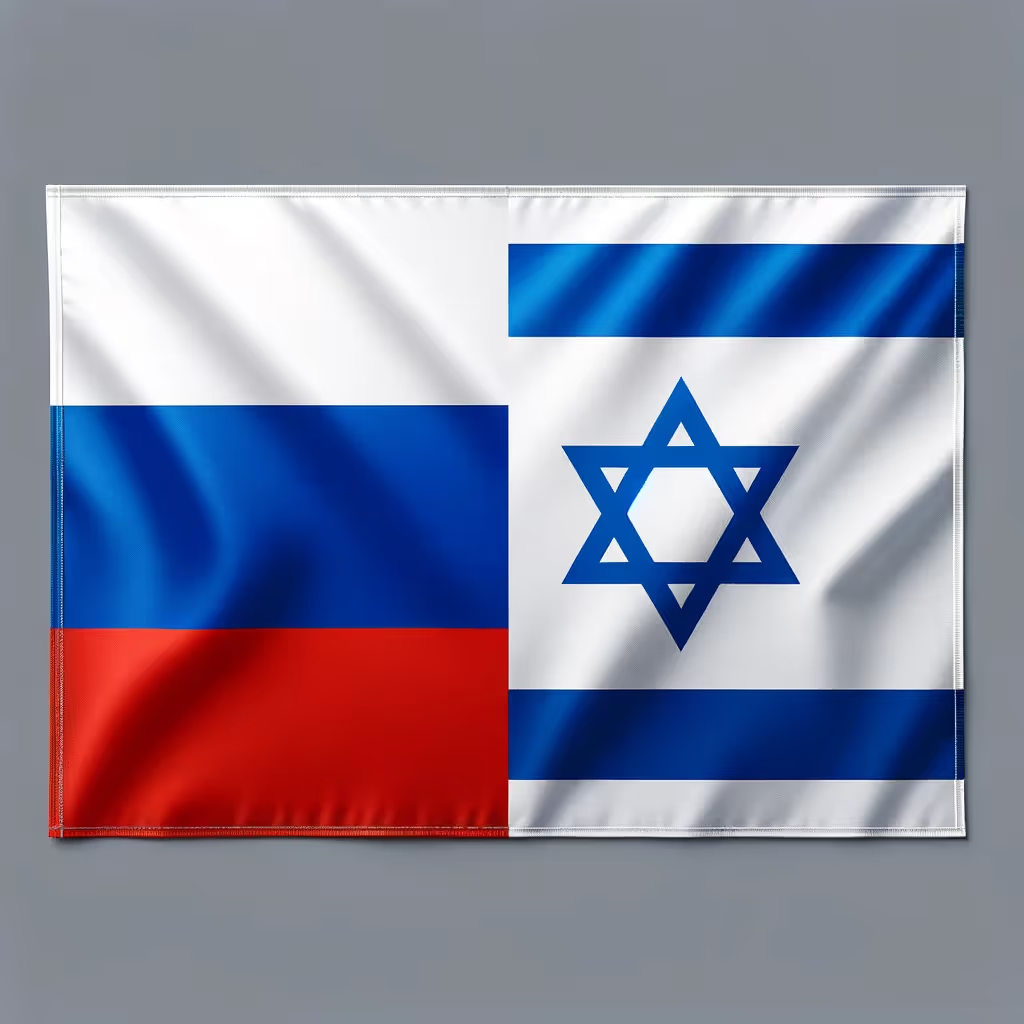
- Recent developments, particularly Russia's involvement in Ukraine and its reliance on Iran, have strained its relations with Israel, marking a departure from the previously improving ties under Putin's leadership.
- Russia's strategic positioning in the Middle East, balancing relationships with Israel, Iran, and Saudi Arabia, aiming to be a central player capable of engaging with all sides.
Overview:
This policy brief summarizes insights from Brookings expert Fiona Hill on Russia's approach to the Israeli-Palestinian conflict and its relationship with Hamas before October 7, as well as the implications of recent geopolitical shifts.
Key Quotes:
- "During the Soviet period and the Cold War, there was a great deal of hostility toward Israel, which was tied to deeply rooted domestic antisemitism as well as the Kremlin’s suspicion of Soviet Jews having divided loyalties."
- "By the time Vladimir Putin comes along in 2000, over 1 million Israelis have some kind of heritage from the former Soviet Union... Putin starts to see this population as an opportunity for Russia."
What They Discuss:
- Russia's historical hostility towards Israel during the Soviet era, transitioning to a more engaged approach with the creation of Israel and the subsequent migration of Soviet Jews.
- The shift in Russia's stance under Putin, leveraging the significant Russian-speaking population in Israel to foster closer ties, seeing it as a strategic opportunity for economic and political engagement.
- Putin's personal connections and favorable disposition towards Jews, influenced by his early life experiences, contributing to a nuanced relationship with Israel and its Jewish community.
- Russia's strategic positioning in the Middle East, balancing relationships with Israel, Iran, and Saudi Arabia, aiming to be a central player capable of engaging with all sides.
- The impact of Russia's military involvement in Syria on its relations with Israel, including the establishment of a deconfliction channel between the two countries.
- The deterioration of Russia-Israel relations following Russia's actions in Ukraine and its growing dependence on Iran, culminating in a significant shift in stance on October 7, with Putin making antisemitic remarks and distancing from Netanyahu.
What They Recommend:
- Acknowledging the complexity of Russia's evolving relationship with Israel and the broader Middle East, policymakers should monitor Russia's engagements and alignments, especially its closer ties with Iran and the implications for regional stability.
- Diplomatic efforts should consider Russia's historical and current motivations in the region, including its desire to assert itself as a major player and security guarantor, to effectively navigate and respond to its actions.
Key Takeaways:
- Russia's approach to the Israeli-Palestinian conflict and its relationship with Hamas have undergone significant changes, influenced by historical legacies, Putin's personal experiences, and strategic geopolitical calculations.
- Recent developments, particularly Russia's involvement in Ukraine and its reliance on Iran, have strained its relations with Israel, marking a departure from the previously improving ties under Putin's leadership.
- The evolving dynamics underscore the need for nuanced understanding and strategic responses to Russia's actions in the Middle East, considering its potential to impact regional security and diplomatic relations.
This is a brief overview of Fiona Hill's insights on Russia's stance towards the Israeli-Palestinian conflict and its broader geopolitical implications. For complete insights, we recommend reading the full article.


Related


President Trump’s latest tariff plan is under fire from a conservative think tank, which says the math behind it is both flawed and misleading.
- Donald Trump focused on separating himself from his party's extreme policies and addressing key voter concerns like the economy and abortion.
The presidential debate accomplished more for Harris than it did for Trump


AEI experts explore the potential political impact of President Biden's support for Israel on his electoral prospects in Michigan, particularly among Muslim and Arab American voters.
The shift in Arab American support away from Biden in Michigan is important, but it is unlikely to be the sole deciding factor in Michigan's electoral outcome.
Will Support for Israel Cost Biden Michigan?

Cato Institute expert Robert A. Levy writes that U.S. SupremeCourt Chief Justice Roberts will be "concerned about political repercussions" if Trump is disqualified from running.
Levy also argues that liberal justices will likely lean toward allowing voting citizens to decide if Trump should be President.
Trump’s Disqualification: A Primer
