

.avif)


.avif)
.avif)
.avif)
.avif)
.avif)















.avif)




TOPIC
International Affairs
8
articles

Syria faces more daunting challenges than Libya did in 2011, highlighted by deep social divisions, a devastated infrastructure, and a complex geopolitical landscape. The situation calls for cautious optimism as Syrians navigate a new political reality following the fall of the Assad regime, per commentary from Chatham House.
Syria faces more daunting challenges than Libya did in 2011, highlighted by deep social divisions, a devastated infrastructure, and a complex geopolitical landscape. The situation calls for cautious optimism as Syrians navigate a new political reality following the fall of the Assad regime, per commentary from Chatham House.
The issue:
Syria's transition is fraught with difficulties, including a death toll exceeding 600,000 and a significant refugee crisis. The country's infrastructure has been severely damaged, which creates a deeply fragmented society with intricate communal rifts.
What they recommend:
No recommendations provided in the commentary.
Go deeper:
The economic instability in Syria is exacerbated by the lack of a united national interest, as its oil resources are mainly in Kurdish-controlled areas rather than widely shared. In comparison, Libya's economy depended on oil, fostering some cooperation among rival factions. Lessons from Libya highlight the risks of external meddling, which could destabilize any fragile agreements among Syrian factions.
This is a brief overview of a commentary from Chatham House. For complete insights, we recommend reading the full commentary.
Syria faces more daunting challenges than Libya did in 2011, highlighted by deep social divisions, a devastated infrastructure, and a complex geopolitical landscape. The situation calls for cautious optimism as Syrians navigate a new political reality following the fall of the Assad regime, per commentary from Chatham House.
U.S. allies contribute more to global security than often perceived. Current NATO spending targets do not fully capture each country's capabilities and contributions, which differ widely, per commentary from RAND Corporation.
U.S. allies contribute more to global security than often perceived. Current NATO spending targets do not fully capture each country's capabilities and contributions, which differ widely, per commentary from RAND Corporation.
The issue:
Many in the U.S. believe allies do not contribute fairly to global security costs, primarily due to a focus on the 2% GDP spending target. However, data shows that 23 of the 32 NATO members met this goal last year, reflecting significant progress over the past decade.
What they recommend:
No recommendations provided in the commentary.
Go deeper:
The updated analysis reveals that the U.S. share of global security contributions has decreased from 53% post-Cold War to around 39% in 2023. Notably, Eastern European countries are among the top contributors due to security concerns from Russia. Moreover, using metrics beyond spending, such as capabilities, can inform more tailored support requests from allies.
This is a brief overview of a commentary from RAND Corporation. For complete insights, we recommend reading the full commentary.
U.S. allies contribute more to global security than often perceived. Current NATO spending targets do not fully capture each country's capabilities and contributions, which differ widely, per commentary from RAND Corporation.
China is poised to strengthen its political and economic presence in the Middle East over the next four years. This engagement will be motivated primarily by a need to secure energy resources and enhance diplomatic relations, per commentary from Brookings.
China is poised to strengthen its political and economic presence in the Middle East over the next four years. This engagement will be motivated primarily by a need to secure energy resources and enhance diplomatic relations, per commentary from Brookings.
The issue:
China's reliance on Middle Eastern oil remains a core challenge, with approximately 53% of its crude imports coming from the region in 2022. This dependence will persist despite efforts to diversify energy sources, particularly as the country aims to reduce carbon emissions while still increasing oil usage.
What they recommend:
No recommendations provided in the commentary.
Go deeper:
China's economic engagement with the Middle East reached nearly $229 billion in 2022, highlighting a growing interest beyond just energy. Investments in sectors like technology and infrastructure suggest that China aims to create stronger trade ties and reduce overdependence on oil. The Gaza conflict may shift China's diplomatic strategies, prompting a reassessment of relationships with Saudi Arabia and Iran.
This is a brief overview of a commentary from Brookings. For complete insights, we recommend reading the full commentary.
China is poised to strengthen its political and economic presence in the Middle East over the next four years. This engagement will be motivated primarily by a need to secure energy resources and enhance diplomatic relations, per commentary from Brookings.
Invading Mexico will not effectively resolve the cartel problem and may worsen existing issues, such as migration and international relations. Military incursions could undermine bilateral cooperation and fail to yield strategic success, posing significant risks to U.S. interests, per commentary from Cato Institute.
Invading Mexico will not effectively resolve the cartel problem and may worsen existing issues, such as migration and international relations. Military incursions could undermine bilateral cooperation and fail to yield strategic success, posing significant risks to U.S. interests, per commentary from Cato Institute.
The issue:
The core challenge lies in addressing the complex and resilient nature of drug cartels in Mexico, which continue to thrive despite previous military efforts. Proposals for U.S. military action overlook historical insights, where past interventions did not eliminate cartel influence and often worsened violence.
What they recommend:
No recommendations provided in the commentary.
Go deeper:
Past military actions have shown that cartels adapt quickly, with violence often increasing despite tactical victories. Moreover, military incursions could severely damage U.S.-Mexico relations, which are crucial for joint efforts in managing migration and countering China’s growing influence. Understanding local dynamics and political support is essential for any proposed solution, highlighting the complexity of the issue.
This is a brief overview of a commentary from Cato Institute. For complete insights, we recommend reading the full commentary.
Invading Mexico will not effectively resolve the cartel problem and may worsen existing issues, such as migration and international relations. Military incursions could undermine bilateral cooperation and fail to yield strategic success, posing significant risks to U.S. interests, per commentary from Cato Institute.
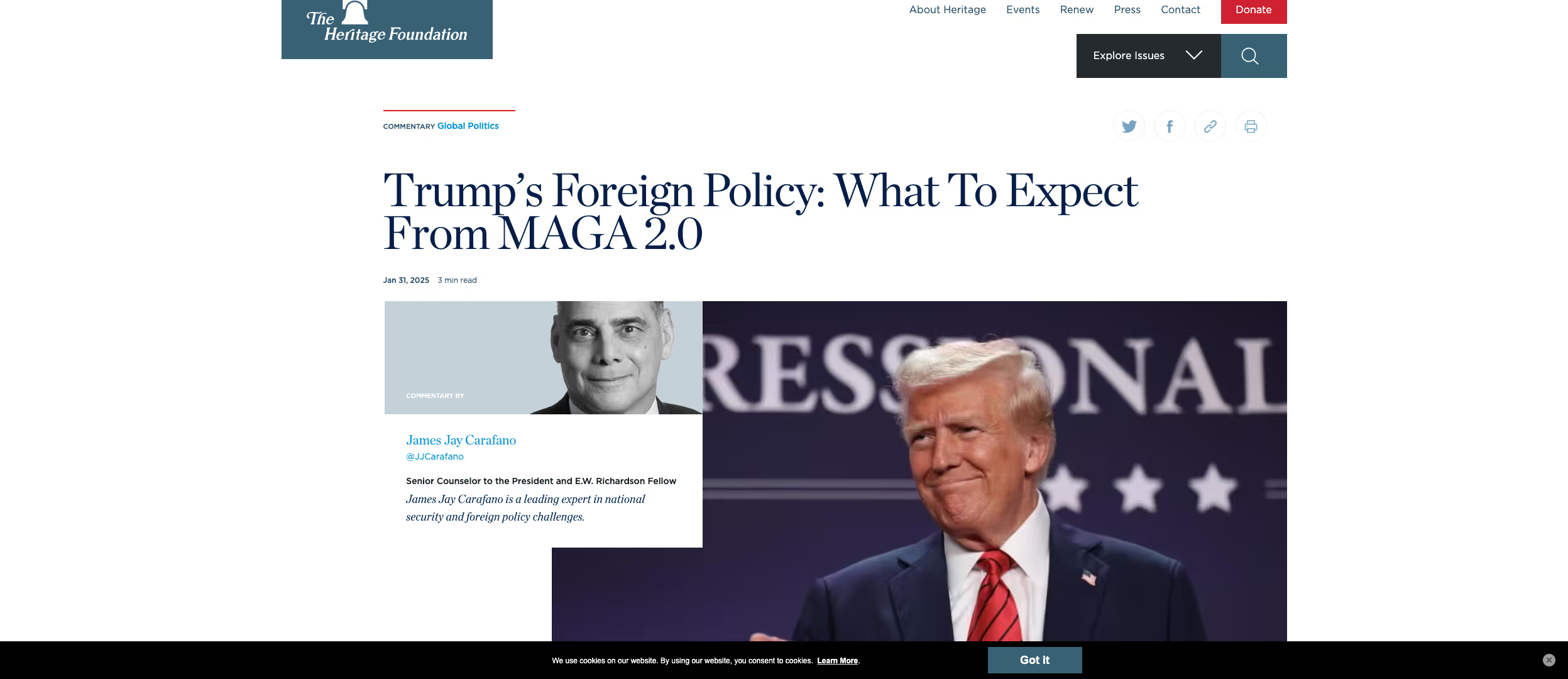
Trump's foreign policy aims to reassert America's strength on the global stage while demanding accountability from allies and adversaries alike. By prioritizing an America-first agenda, Trump seeks to reshape international relations in favor of U.S. interests, per commentary from Heritage Foundation.
Trump's foreign policy aims to reassert America's strength on the global stage while demanding accountability from allies and adversaries alike. By prioritizing an America-first agenda, Trump seeks to reshape international relations in favor of U.S. interests, per commentary from Heritage Foundation.
The issue:
The current foreign policy landscape is challenged by America's perceived lack of presence and strength, following the Biden administration's approach. Many Americans feel a strong urge for a foreign policy that not only protects but also elevates U.S. interests and allies.
What they recommend:
Trump's administration emphasizes an assertive foreign policy that involves ending financial support for countries that do not contribute to their own defense. He advocates for significant shifts in NATO funding and a focus on bolstering American energy independence.
Go deeper:
Trump's strategy includes restoring deterrence against global adversaries like Russia, Iran, and China, which he sees as weakened by their own miscalculations. Additionally, major investments from allied nations, such as the anticipated $600 billion from Saudi Arabia, are designed to invigorate the U.S. economy and create mutual partnerships. Overall, Trump's vision reflects a departure from fiscal internationalism to a distinctly self-interested approach to global affairs.
This is a brief overview of a commentary from Heritage Foundation. For complete insights, we recommend reading the full commentary.
Trump's foreign policy aims to reassert America's strength on the global stage while demanding accountability from allies and adversaries alike. By prioritizing an America-first agenda, Trump seeks to reshape international relations in favor of U.S. interests, per commentary from Heritage Foundation.

Overview:
This article was written by Ryan C. Berg and Christopher Hernandez-Roy at Center for Strategic and International Studies.
Key Quotes:
What They Discuss:
What They Recommend:
Key Takeaways:
This is a brief overview of the article by Ryan C. Berg and Christopher Hernandez-Roy at Center for Strategic and International Studies. For complete insights, we recommend reading the full article.