January 14, 2024
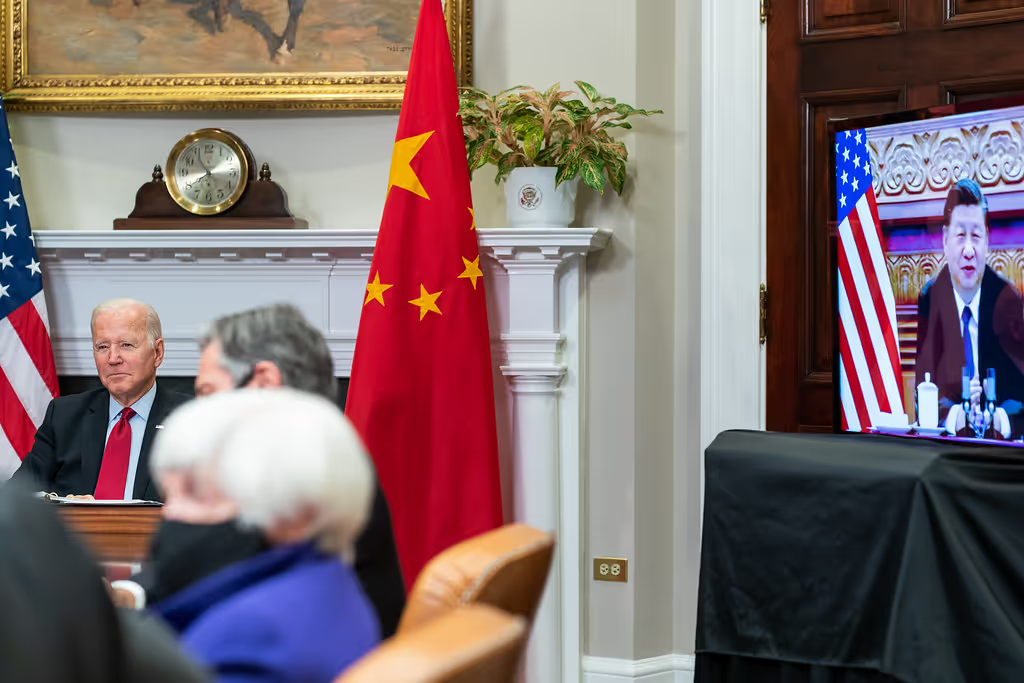
Is US security dependent on limiting China’s economic growth?
Thinktanker Summary
AI-assisted summary reviewed by Thinktanker. While reasonable care is taken, errors may occur. Refer to the original source text for full accuracy.
  • This written debate by Brookings experts dives into whether U.S. security is dependent on limiting China's economic growth.
  • The U.S. should focus on countering China's economic tactics rather than explicitly aiming to slow its growth. Policies should be developed to protect U.S. interests, particularly in technology and innovation sectors.

Overview:

This written debate by Brookings experts, Cameron F. Kerry, Mary E. Lovely, Pavneet Singh, Liza Tobin, Ryan Hass, Patricia M. Kim, and Emilie Kimball, dives into whether U.S. security is dependent on limiting China's economic growth.

  • The debate explores the complexities of the U.S.-China relationship, focusing on economic, diplomatic, military, and technological aspects.
  • It examines the implications of China's growth strategies and the potential responses by the United States.​

Key Quotes:

  1. "It is not the People’s Republic of China’s (PRC) economic growth, per se, that poses a risk to U.S. national security, but rather the zero-sum means by which the regime in Beijing continues to achieve that growth, as well as the autocratic end goals that growth facilitates." - Liza Tobin
  2. "The time when the United States alone had the power to shape the trajectory of Chinese economic growth is long past." - Cameron F. Kerry

What They Discuss:

  • The debate addresses whether China’s economic growth presents a risk to America’s national security and if the U.S. should act to limit this growth.
  • It discusses the impact of China's economic tactics on global supply chains and market competition.
  • The experts consider the effectiveness of U.S. policies aimed at countering China's economic strategies.
  • They explore the potential consequences of slowing China's growth on U.S. interests and global stability.
  • The article also delves into the strategic importance of technology and innovation in the U.S.-China competition.

What They Recommend:

  • The U.S. should focus on countering China's economic tactics rather than explicitly aiming to slow its growth.
  • Policies should be developed to protect U.S. interests, particularly in technology and innovation sectors.
  • The U.S. needs to bolster its economic strengths and correct existing misalignments to compete effectively with China.
  • A more nuanced and targeted approach towards China is recommended, differentiating between China's rise and specific policies of concern.​

Key Takeaways:

  • The debate highlights the complexity of the U.S.-China economic and strategic relationship.
  • It underscores the need for the U.S. to adapt its policies to effectively manage and compete with China's growing influence.
  • The recommendations suggest a strategic focus on protecting U.S. interests and enhancing competitiveness in key areas.​

This is a brief overview of the debate hosted by Brookings. For complete insights, we recommend reading the full article.

THINK TANK PROFILE

Liberal
Leans Right

Every think tank. One newsletter.

Your new weekly briefing - curated from America’s top think tanks on Substack.

Related

Center for Strategic International Studies

The presidential debate accomplished more for Harris than it did for Trump

President Trump’s latest tariff plan is under fire from a conservative think tank, which says the math behind it is both flawed and misleading.

  • Donald Trump focused on separating himself from his party's extreme policies and addressing key voter concerns like the economy and abortion.
Commentary
Leans Left
RAND Corporation

Will Support for Israel Cost Biden Michigan?

AEI experts explore the potential political impact of President Biden's support for Israel on his electoral prospects in Michigan, particularly among Muslim and Arab American voters.

The shift in Arab American support away from Biden in Michigan is important, but it is unlikely to be the sole deciding factor in Michigan's electoral outcome.

Commentary
Conservative
Cato Institute

Trump’s Disqualification: A Primer

Cato Institute expert Robert A. Levy writes that U.S. SupremeCourt Chief Justice Roberts will be "concerned about political repercussions" if Trump is disqualified from running.

Levy also argues that liberal justices will likely lean toward allowing voting citizens to decide if Trump should be President.


Video
Libertarian