
January 13, 2024
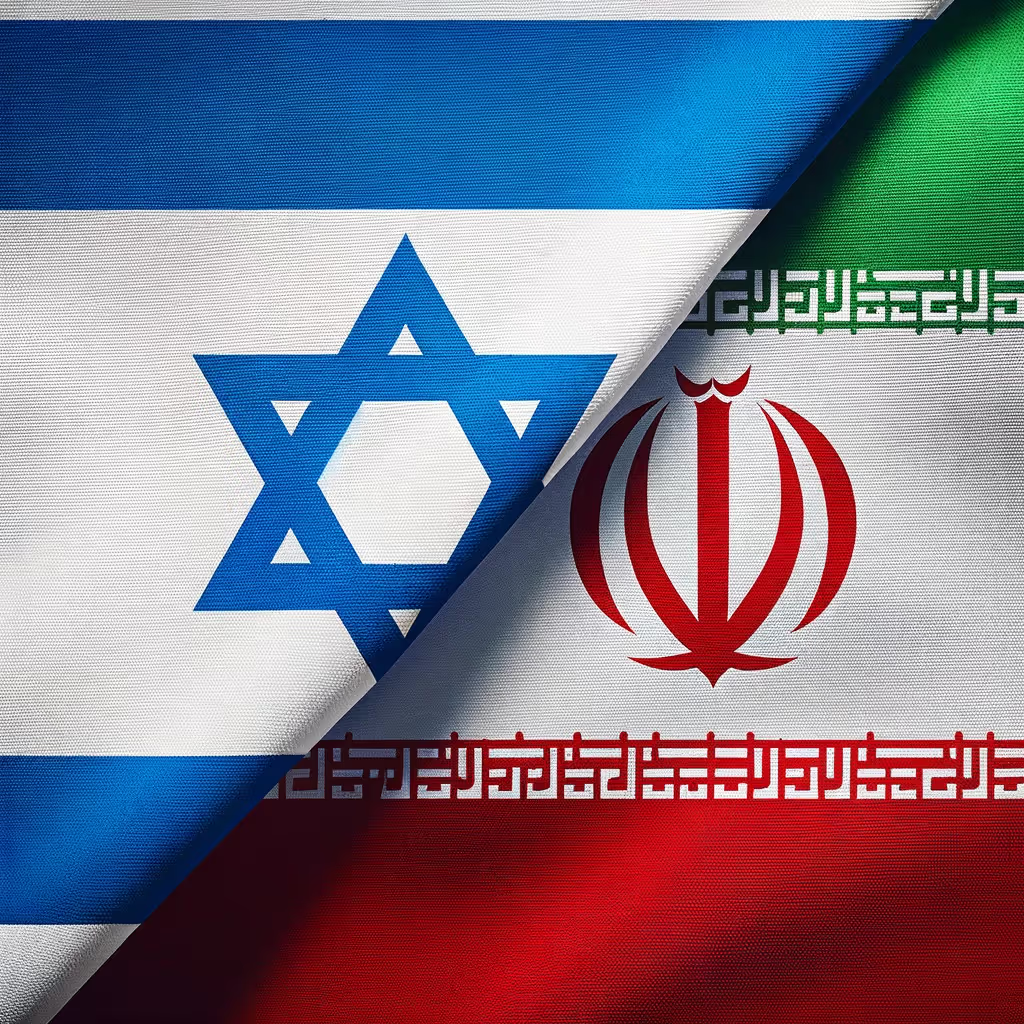
Assessing Israel’s Strike on Iran
Thinktanker Summary
AI-assisted summary reviewed by Thinktanker. While reasonable care is taken, errors may occur. Refer to the original source text for full accuracy.
  • Israel conducted a precision strike on an Iranian air defense system, signaling its capability and restraint to avoid broader conflict.
  • The attack was a response to an unprecedented direct missile and drone attack by Iran on Israeli soil, marking a significant escalation in their long-standing tensions.

Overview:

This article was written by Alexander Palmer, Daniel Byman, Seth G. Jones, and Joseph S. Bermudez Jr., analyzing a recent military engagement between Israel and Iran.

  • Israel conducted a precision strike on an Iranian air defense system, signaling its capability and restraint to avoid broader conflict.
  • The attack was a response to an unprecedented direct missile and drone attack by Iran on Israeli soil, marking a significant escalation in their long-standing tensions.

Key Quotes:

  • "Israel walked a tightrope between escalating the conflict further and inaction, while also signaling to Tehran that it could conduct precision strikes against strategic locations."
  • "The strike minimized this fear by targeting only the shortest-range radar in Iran’s air defense complex, designed not to locate threats but to guide interceptor missiles to their target."

What They Discuss:

  • The Israeli strike on April 19 targeted an S-300 air defense system part in Isfahan, which is strategically important due to its proximity to Iran’s Natanz nuclear enrichment facility.
  • The strike was calibrated to deter further escalation by destroying only a single engagement radar, which was quickly replaced by Iran.
  • Iran's initial attack on April 13 involved over 300 missiles and drones, the first direct assault from Iranian soil against Israel.
  • The incident reflects ongoing tension and the potential for escalation, influenced by internal political pressures in both Israel and Iran.
  • Both nations showed restraint to avoid a full-scale war, although future provocations could disrupt this delicate balance.

What They Recommend:

  • Continued vigilance and preparedness for rapid escalation in response to geopolitical developments in the region.
  • Engagement in diplomatic efforts to mitigate the risks of further military confrontations.

Key Takeaways:

  • The incident underscores the fragile nature of regional stability and the potential for minor incidents to escalate into significant conflicts.
  • Israel’s strategy of measured military responses aims to maintain a balance between deterrence and outright war.
  • The political dynamics within both Israel and Iran play crucial roles in shaping their military engagements.

Disclaimer:

This is a brief overview of the work by Alexander Palmer, Daniel Byman, Seth G. Jones, and Joseph S. Bermudez Jr. from the Center for Strategic and International Studies (CSIS). For complete insights, we recommend reading the full article.

THINK TANK PROFILE

Liberal
Leans Right

Every think tank. One newsletter.

Your new weekly briefing - curated from America’s top think tanks on Substack.

Related

Center for Strategic International Studies

The presidential debate accomplished more for Harris than it did for Trump

President Trump’s latest tariff plan is under fire from a conservative think tank, which says the math behind it is both flawed and misleading.

  • Donald Trump focused on separating himself from his party's extreme policies and addressing key voter concerns like the economy and abortion.
Commentary
Leans Left
RAND Corporation

Will Support for Israel Cost Biden Michigan?

AEI experts explore the potential political impact of President Biden's support for Israel on his electoral prospects in Michigan, particularly among Muslim and Arab American voters.

The shift in Arab American support away from Biden in Michigan is important, but it is unlikely to be the sole deciding factor in Michigan's electoral outcome.

Commentary
Conservative
Cato Institute

Trump’s Disqualification: A Primer

Cato Institute expert Robert A. Levy writes that U.S. SupremeCourt Chief Justice Roberts will be "concerned about political repercussions" if Trump is disqualified from running.

Levy also argues that liberal justices will likely lean toward allowing voting citizens to decide if Trump should be President.


Video
Libertarian