TOPIC

Ukraine-Russia War

9
articles
Count

Feature

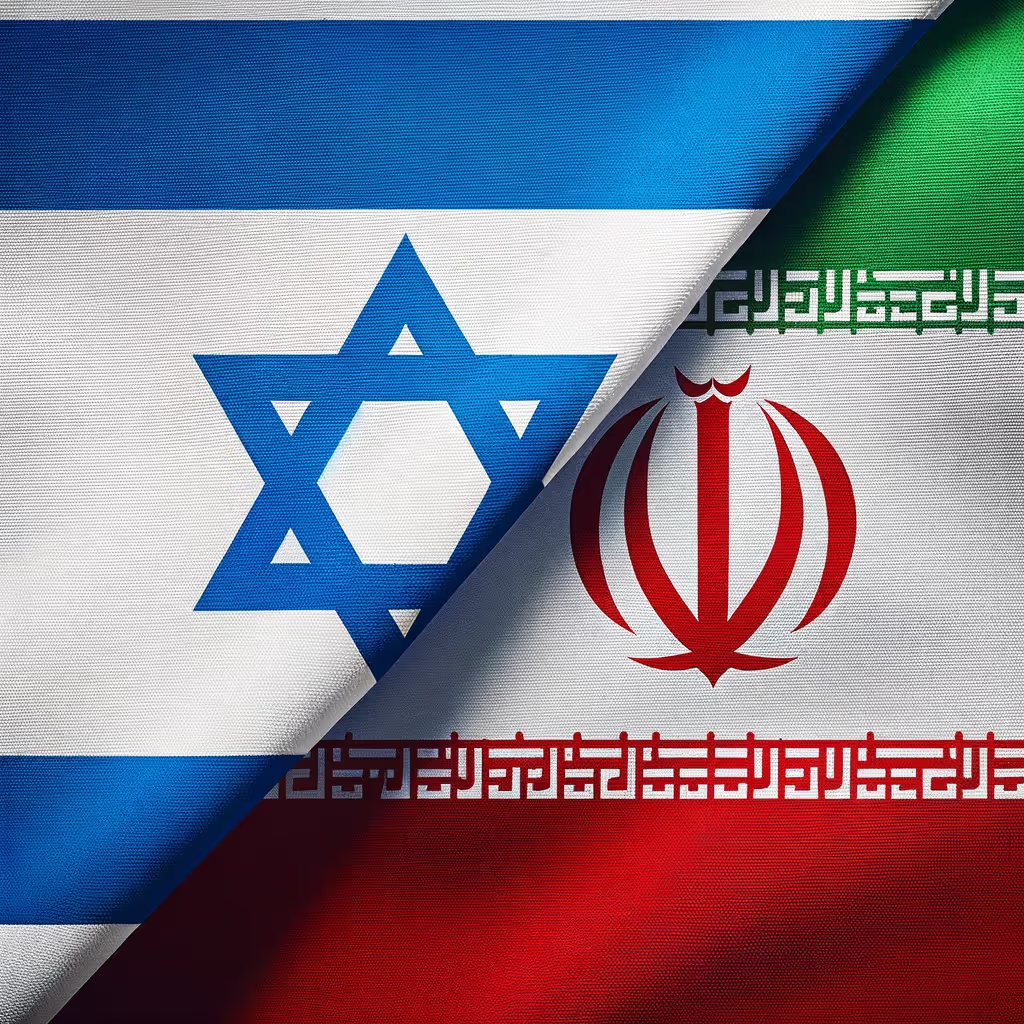
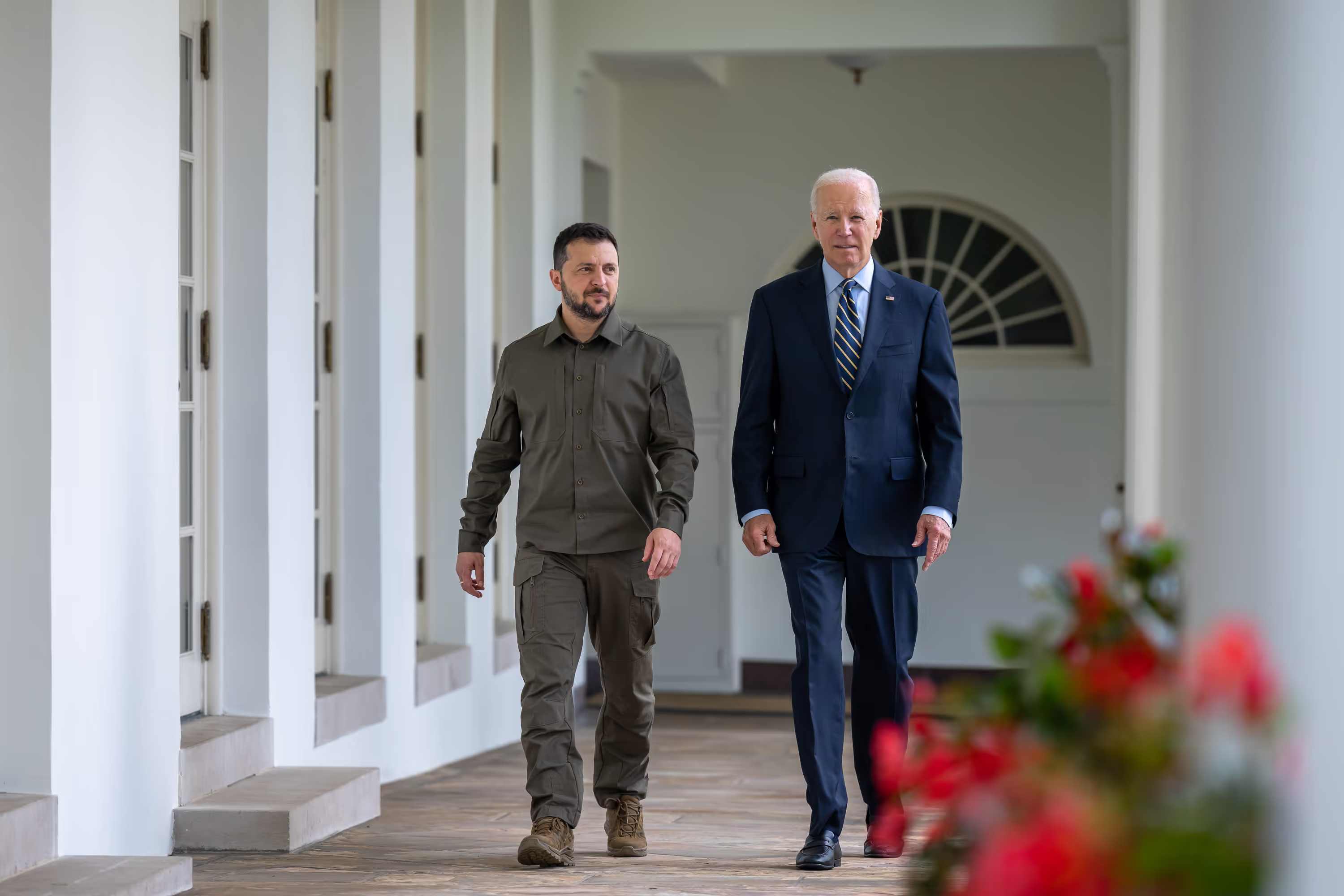
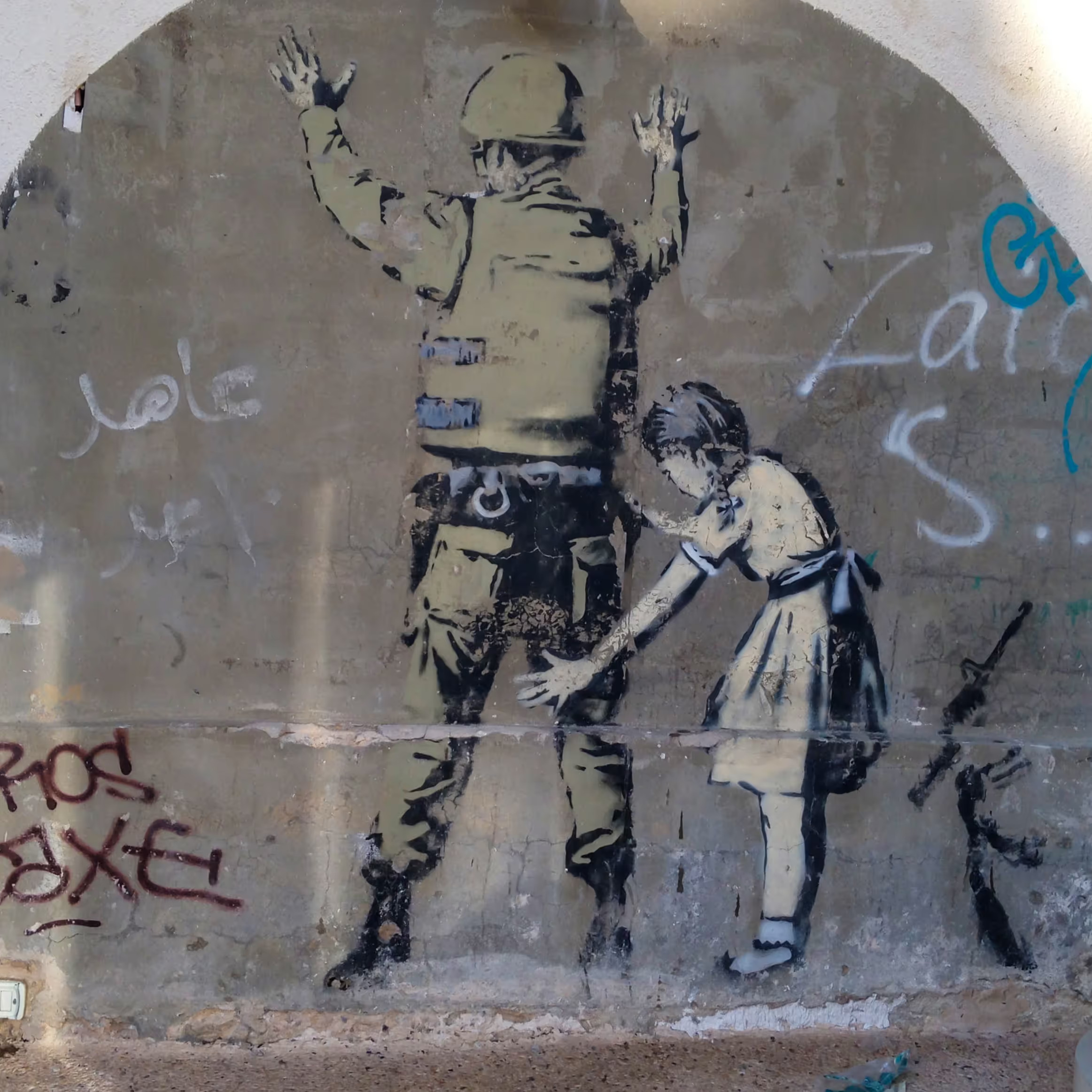
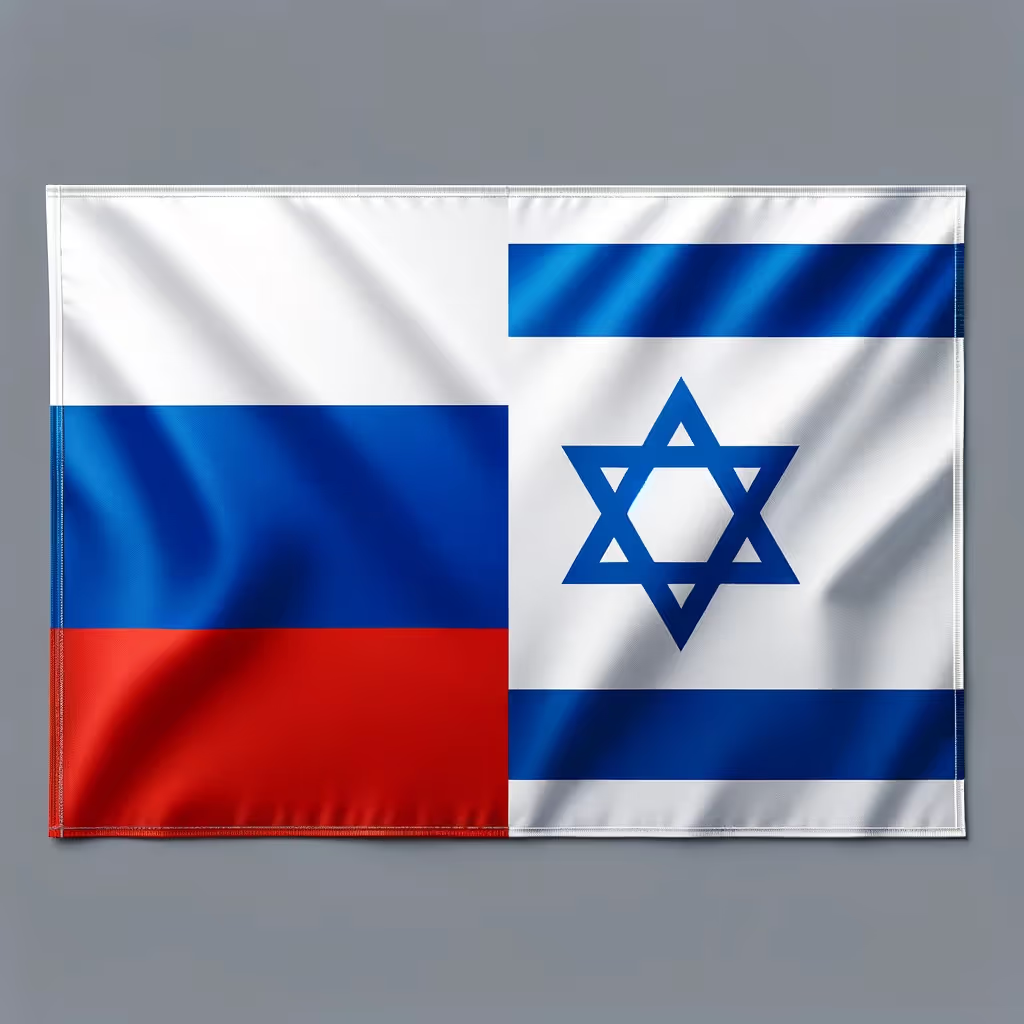
The Gaza War Has Convinced Russia It Was Right All Along
  • Carnegie Endowment expert Nikita Smagin writes that the Gaza conflict has reinforced Russia's belief in the correctness of its foreign policy approach, particularly in relation to the Western-centric international system.
  • Russia views the conflict as an opportunity to further its geopolitical interests, especially amidst the ongoing war in Ukraine.
Liberal
January 14, 2024

The Gaza War Has Convinced Russia It Was Right All Along

  • Carnegie Endowment expert Nikita Smagin writes that the Gaza conflict has reinforced Russia's belief in the correctness of its foreign policy approach, particularly in relation to the Western-centric international system.
  • Russia views the conflict as an opportunity to further its geopolitical interests, especially amidst the ongoing war in Ukraine.
Liberal

More on:

Ukraine-Russia War
Topics
Jan 13, 2024
The Art of a Good Deal: Ukraine’s Strategic Economic Opportunity for the United States
Thinktanker Summary
AI-assisted summary reviewed by Thinktanker. While reasonable care is taken, errors may occur. Refer to the original source text for full accuracy.

Ukraine presents a strategic economic opportunity for the United States, particularly as the nation is rich in critical minerals and advanced technology sectors. Investing in Ukraine not only enhances economic ties but also fortifies U.S. national security interests amid geopolitical tensions, per commentary from Council on Foreign Relations.

Thinktanker Summary

Ukraine presents a strategic economic opportunity for the United States, particularly as the nation is rich in critical minerals and advanced technology sectors. Investing in Ukraine not only enhances economic ties but also fortifies U.S. national security interests amid geopolitical tensions, per commentary from Council on Foreign Relations.

Ukraine presents a strategic economic opportunity for the United States, particularly as the nation is rich in critical minerals and advanced technology sectors. Investing in Ukraine not only enhances economic ties but also fortifies U.S. national security interests amid geopolitical tensions, per commentary from Council on Foreign Relations.

The issue:  

Ukraine faces the challenge of protecting its valuable economic resources amidst ongoing conflict with Russia, which seeks to dominate its wealth. The country is estimated to hold $10 to $12 trillion in critical minerals, making it a significant player in both regional and global markets.

What they recommend:  

Expert recommendations include establishing a comprehensive strategic partnership focused on critical minerals and defense manufacturing cooperation. Collaborating with Ukraine can support both U.S. interests and Ukraine's defense capabilities, creating a mutually beneficial relationship.

Go deeper:  

Ukraine’s defense sector has rapidly evolved since the invasion, positioning it as a modern and competitive force capable of supplying NATO allies with affordable munitions. Its skills in IT and cybersecurity are becoming assets as it emerges as a “Mil-Tech Valley,” leading in dual-use technology. Securing Ukraine's resources would limit reliance on China and enhance U.S. resilience in critical supply chains.

This is a brief overview of a commentary from Council on Foreign Relations. For complete insights, we recommend reading the full commentary.

The Art of a Good Deal: Ukraine’s Strategic Economic Opportunity for the United States

Ukraine presents a strategic economic opportunity for the United States, particularly as the nation is rich in critical minerals and advanced technology sectors. Investing in Ukraine not only enhances economic ties but also fortifies U.S. national security interests amid geopolitical tensions, per commentary from Council on Foreign Relations.

Center
Topics
Jan 14, 2024
Tracing the rise of Russian state media on TikTok
Thinktanker Summary
AI-assisted summary reviewed by Thinktanker. While reasonable care is taken, errors may occur. Refer to the original source text for full accuracy.
  • Brookings Foreign Policy Fellow Valerie Wirtschafter examines the growing influence of Russian state-affiliated accounts on TikTok and compares it with their presence on other social media platforms like Telegram and X (formerly Twitter).
  • Russian state-affiliated accounts are leveraging TikTok's reach to disseminate state-backed narratives.
  • Despite lower overall activity compared to other platforms, the engagement per post on TikTok is significantly higher.

Thinktanker Summary

  • Brookings Foreign Policy Fellow Valerie Wirtschafter examines the growing influence of Russian state-affiliated accounts on TikTok and compares it with their presence on other social media platforms like Telegram and X (formerly Twitter).
  • Russian state-affiliated accounts are leveraging TikTok's reach to disseminate state-backed narratives.
  • Despite lower overall activity compared to other platforms, the engagement per post on TikTok is significantly higher.

Overview:

This article examines the growing influence of Russian state-affiliated accounts on TikTok and compares it with their presence on other social media platforms like Telegram and X (formerly Twitter).

  • Russian state-affiliated accounts are leveraging TikTok's reach to disseminate state-backed narratives.
  • Despite lower overall activity compared to other platforms, the engagement per post on TikTok is significantly higher.

Key Quotes:

  • "Russian state-affiliated accounts have accelerated their use of TikTok since the start of 2024."
  • "Posts pertaining to U.S. politics make up a small percentage of overall content shared by Russian state-affiliated accounts, but they represent a slightly higher percentage of total posts on TikTok than on X or Telegram."

What They Discuss:

  • In 2024, 46 Russian state-affiliated accounts have increased their posting frequency on TikTok, with some averaging over 10 posts a day.
  • TikTok posts from these accounts garner about 100,000 engagements each, far outpacing the engagement seen on other platforms like Telegram and X.
  • Content tied to U.S. politics comprises a higher percentage of posts on TikTok compared to other platforms, with notable engagement in Spanish-language posts.
  • Russian state-affiliated accounts focus on divisive issues in U.S. politics, such as debates over President Biden’s policies and reflections on U.S.-Russia relations.
  • Despite challenges, TikTok's labeling of these accounts as “state-controlled media” varies, affecting public perception and platform response.

What They Recommend:

  • The author suggests ongoing vigilance and proactive measures to counteract the spread of Kremlin-backed narratives on social media platforms.
  • Further research is recommended to understand the trajectory and impact of Russian state messaging on TikTok, particularly in the context of upcoming elections.

Key Takeaways:

  • Russian state-affiliated accounts are exploiting TikTok's extensive reach to target young, diverse audiences, especially through high-engagement, divisive content.
  • The effectiveness of Russian influence operations on TikTok highlights the importance of monitoring and addressing state-backed propaganda on social media.
  • Despite the high engagement rates, the overall share of political content from these accounts on TikTok remains relatively small, yet notably impactful.

Tracing the rise of Russian state media on TikTok

  • Brookings Foreign Policy Fellow Valerie Wirtschafter examines the growing influence of Russian state-affiliated accounts on TikTok and compares it with their presence on other social media platforms like Telegram and X (formerly Twitter).
  • Russian state-affiliated accounts are leveraging TikTok's reach to disseminate state-backed narratives.
  • Despite lower overall activity compared to other platforms, the engagement per post on TikTok is significantly higher.

Leans Left
Topics
Jan 14, 2024
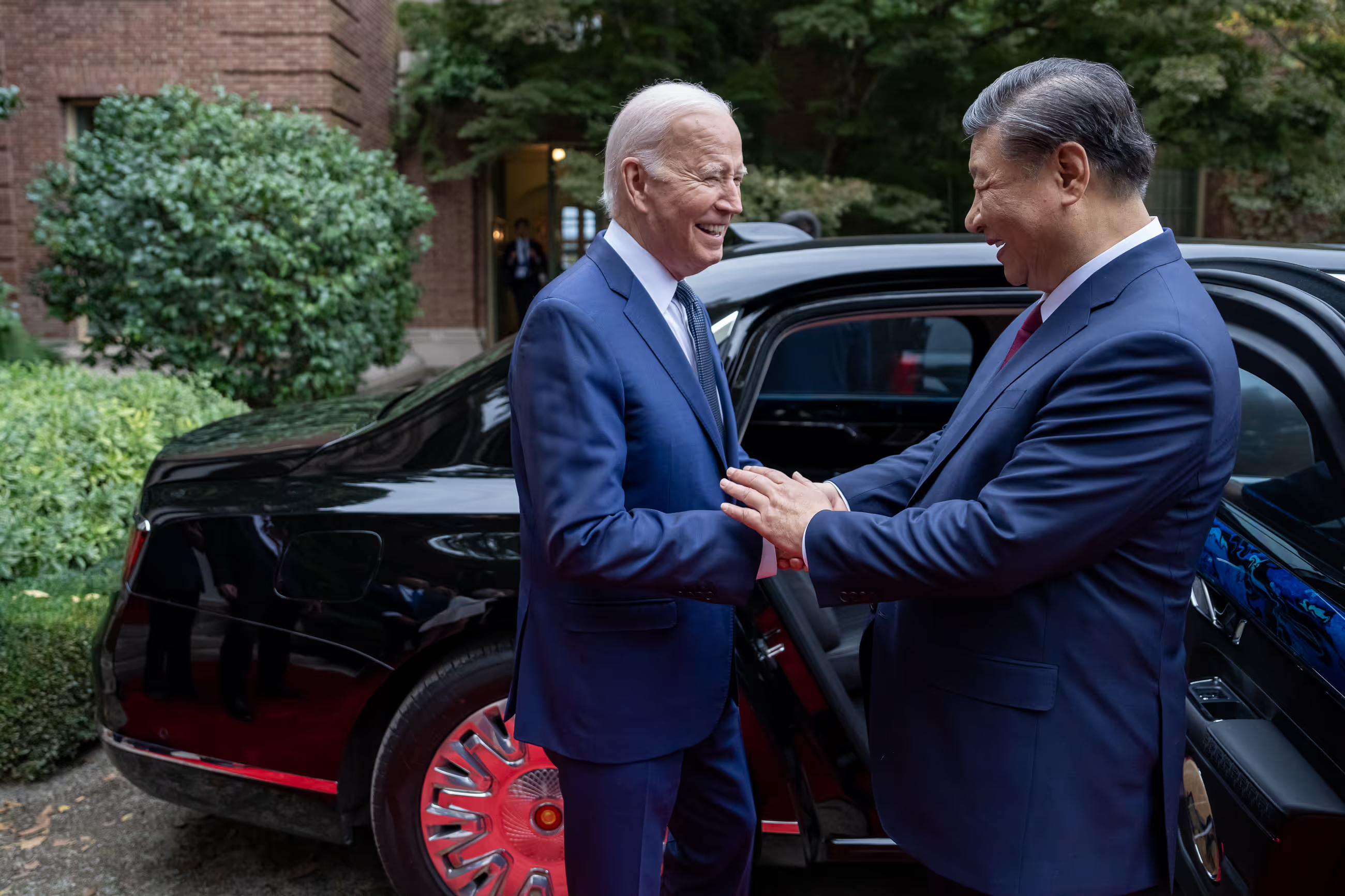
What is Russia’s role in the Israel-Gaza crisis?
Thinktanker Summary
AI-assisted summary reviewed by Thinktanker. While reasonable care is taken, errors may occur. Refer to the original source text for full accuracy.
  • Recent developments, particularly Russia's involvement in Ukraine and its reliance on Iran, have strained its relations with Israel, marking a departure from the previously improving ties under Putin's leadership.
  • Russia's strategic positioning in the Middle East, balancing relationships with Israel, Iran, and Saudi Arabia, aiming to be a central player capable of engaging with all sides.

Thinktanker Summary

  • Recent developments, particularly Russia's involvement in Ukraine and its reliance on Iran, have strained its relations with Israel, marking a departure from the previously improving ties under Putin's leadership.
  • Russia's strategic positioning in the Middle East, balancing relationships with Israel, Iran, and Saudi Arabia, aiming to be a central player capable of engaging with all sides.

Overview: 

This policy brief summarizes insights from Brookings expert Fiona Hill on Russia's approach to the Israeli-Palestinian conflict and its relationship with Hamas before October 7, as well as the implications of recent geopolitical shifts.

Key Quotes:

  • "During the Soviet period and the Cold War, there was a great deal of hostility toward Israel, which was tied to deeply rooted domestic antisemitism as well as the Kremlin’s suspicion of Soviet Jews having divided loyalties."
  • "By the time Vladimir Putin comes along in 2000, over 1 million Israelis have some kind of heritage from the former Soviet Union... Putin starts to see this population as an opportunity for Russia."

What They Discuss:

  • Russia's historical hostility towards Israel during the Soviet era, transitioning to a more engaged approach with the creation of Israel and the subsequent migration of Soviet Jews.
  • The shift in Russia's stance under Putin, leveraging the significant Russian-speaking population in Israel to foster closer ties, seeing it as a strategic opportunity for economic and political engagement.
  • Putin's personal connections and favorable disposition towards Jews, influenced by his early life experiences, contributing to a nuanced relationship with Israel and its Jewish community.
  • Russia's strategic positioning in the Middle East, balancing relationships with Israel, Iran, and Saudi Arabia, aiming to be a central player capable of engaging with all sides.
  • The impact of Russia's military involvement in Syria on its relations with Israel, including the establishment of a deconfliction channel between the two countries.
  • The deterioration of Russia-Israel relations following Russia's actions in Ukraine and its growing dependence on Iran, culminating in a significant shift in stance on October 7, with Putin making antisemitic remarks and distancing from Netanyahu.

What They Recommend:

  • Acknowledging the complexity of Russia's evolving relationship with Israel and the broader Middle East, policymakers should monitor Russia's engagements and alignments, especially its closer ties with Iran and the implications for regional stability.
  • Diplomatic efforts should consider Russia's historical and current motivations in the region, including its desire to assert itself as a major player and security guarantor, to effectively navigate and respond to its actions.

Key Takeaways:

  • Russia's approach to the Israeli-Palestinian conflict and its relationship with Hamas have undergone significant changes, influenced by historical legacies, Putin's personal experiences, and strategic geopolitical calculations.
  • Recent developments, particularly Russia's involvement in Ukraine and its reliance on Iran, have strained its relations with Israel, marking a departure from the previously improving ties under Putin's leadership.
  • The evolving dynamics underscore the need for nuanced understanding and strategic responses to Russia's actions in the Middle East, considering its potential to impact regional security and diplomatic relations.

This is a brief overview of Fiona Hill's insights on Russia's stance towards the Israeli-Palestinian conflict and its broader geopolitical implications. For complete insights, we recommend reading the full article.

What is Russia’s role in the Israel-Gaza crisis?

  • Recent developments, particularly Russia's involvement in Ukraine and its reliance on Iran, have strained its relations with Israel, marking a departure from the previously improving ties under Putin's leadership.
  • Russia's strategic positioning in the Middle East, balancing relationships with Israel, Iran, and Saudi Arabia, aiming to be a central player capable of engaging with all sides.
Leans Left
Topics
Jan 14, 2024
What to watch in Ukraine in 2024
Thinktanker Summary
AI-assisted summary reviewed by Thinktanker. While reasonable care is taken, errors may occur. Refer to the original source text for full accuracy.
  • Brookings experts are watching the EU's capability to fund Ukraine, NATO's strategy for integrating Ukraine, and the possibility of either Russia or Ukraine breaking through stalemate on the battlefied.
  • They are also watching Western defense industry's ability to match Russia's, the international community's potential appropriation of Russian assets for Ukraine's rebuilding, and the influence of the 2024 U.S. presidential election.

Thinktanker Summary

  • Brookings experts are watching the EU's capability to fund Ukraine, NATO's strategy for integrating Ukraine, and the possibility of either Russia or Ukraine breaking through stalemate on the battlefied.
  • They are also watching Western defense industry's ability to match Russia's, the international community's potential appropriation of Russian assets for Ukraine's rebuilding, and the influence of the 2024 U.S. presidential election.

Overview:

This article from Brookings experts Michael E. O’Hanlon, Constanze Stelzenmüller, and David Wessel examines the ongoing war between Ukraine and Russia as it heads into 2024, highlighting potential military and political turning points. It discusses the current stalemate on the battlefield, the vacillation of Ukraine’s allies, and internal political tensions in Kyiv, all of which could impact Ukraine's ability to defend itself against Russia.

Key Points:

  1. The battlefield situation is largely stalemated, with the main action shifting to Ukraine’s skies. Russia has bombarded Ukraine’s cities and infrastructure, while Ukraine has managed to damage and drive the Russian Navy from its base in Crimea.
  2. European countries, supplying more than 50% of Western aid for Ukraine, are struggling to maintain their support. Hungary's opposition to EU membership talks with Ukraine and the Slovak government's opposition to support for Ukraine highlight these challenges.
  3. In the United States, President Biden is facing difficulties in gaining Congressional approval for his supplemental request of $61 billion for Ukraine.
  4. Internal political tensions in Ukraine are rising, with criticism of President Zelenskyy and his government becoming more evident.

What They're Watching in 2024:

  • The ability of the EU to provide additional funding to Ukraine and NATO's approach to anchoring Ukraine in Western security institutions.
  • Whether either side in the conflict can break out of the military stalemates of 2023.
  • The capacity of Western defense industrial bases and political will to keep up with that of Russia.
  • The potential seizure of Russian assets by the international community to fund Ukraine’s reconstruction.
  • The impact of the U.S. presidential race of 2024 on the situation in Ukraine.

Key Takeaways:

  • The article underscores the complexity of the Ukraine-Russia conflict and the challenges faced by Ukraine and its Western allies.
  • It highlights the importance of continued support from Western nations for Ukraine's defense and the potential consequences of a lack of support.
  • The article suggests that the winter of 2023-24 could be a critical period for the conflict, both militarily and politically.

This is a brief overview of the article from Brookings. For complete insights, we recommend reading the full article.

What to watch in Ukraine in 2024

  • Brookings experts are watching the EU's capability to fund Ukraine, NATO's strategy for integrating Ukraine, and the possibility of either Russia or Ukraine breaking through stalemate on the battlefied.
  • They are also watching Western defense industry's ability to match Russia's, the international community's potential appropriation of Russian assets for Ukraine's rebuilding, and the influence of the 2024 U.S. presidential election.
Leans Left
Topics
Jan 13, 2024
Ukraine’s Desperate Hour: The World Needs a Russian Defeat
Thinktanker Summary
AI-assisted summary reviewed by Thinktanker. While reasonable care is taken, errors may occur. Refer to the original source text for full accuracy.
  • AEI expert Hal Brands writes that the war in Ukraine is a critical test of democratic resilience against authoritarian forces.
  • The outcome of this conflict could either reinforce or erode the current global order, depending on the sustained commitment of democratic nations.

Thinktanker Summary

  • AEI expert Hal Brands writes that the war in Ukraine is a critical test of democratic resilience against authoritarian forces.
  • The outcome of this conflict could either reinforce or erode the current global order, depending on the sustained commitment of democratic nations.

Overview:

  • This op-ed from American Enterprise Institute scholar Hal Brands examines the ongoing conflict in Ukraine, particularly focusing on the global implications and the evolving dynamics of the war.
  • The initial Western response to Russia's invasion appeared strong, but the long-term effectiveness of these measures is now uncertain.
  • The war's outcome could significantly influence global power dynamics, especially regarding democratic resilience against authoritarian expansion.

Key Quotes:

  1. "In the hopeful early months of the war — characterized by Ukrainian resilience, Russian incompetence and Western unity — it often seemed that the conflict was revealing the strength of the free world and the debility of its enemies."
  2. "If the US and its allies can find the fortitude and commitment to see Ukraine through to an acceptable outcome... the conflict might still have mostly constructive consequences."

What They Discuss:

  • The initial success of Western strategies against Russia's invasion, including sanctions and military support to Ukraine.
  • The resilience of the Russian economy despite sanctions, with trade rerouting to Asia and strengthened ties with China.
  • The potential for Russia to emerge as a more formidable, illiberal power post-war.
  • Challenges within the democratic community, including political dysfunction in the US and "Ukraine fatigue" in the West.
  • The uncertain future of the conflict and its implications for global order, particularly if democratic nations fail to maintain support for Ukraine.

What They Recommend:

  • The article suggests the need for sustained Western commitment and support to ensure Ukraine's economic viability and military defense.
  • It emphasizes the importance of increasing the costs for Russia's aggression to maintain global order.

Key Takeaways:

  • The war in Ukraine is a critical test of democratic resilience against authoritarian forces.
  • The outcome of this conflict could either reinforce or erode the current global order, depending on the sustained commitment of democratic nations.
  • The situation remains fluid, and the long-term implications are still uncertain.

This is a brief overview of the work from the American Enterprise Institute. For complete insights, we recommend reading the full article.

Ukraine’s Desperate Hour: The World Needs a Russian Defeat

  • AEI expert Hal Brands writes that the war in Ukraine is a critical test of democratic resilience against authoritarian forces.
  • The outcome of this conflict could either reinforce or erode the current global order, depending on the sustained commitment of democratic nations.
Conservative
Topics
Jan 13, 2024
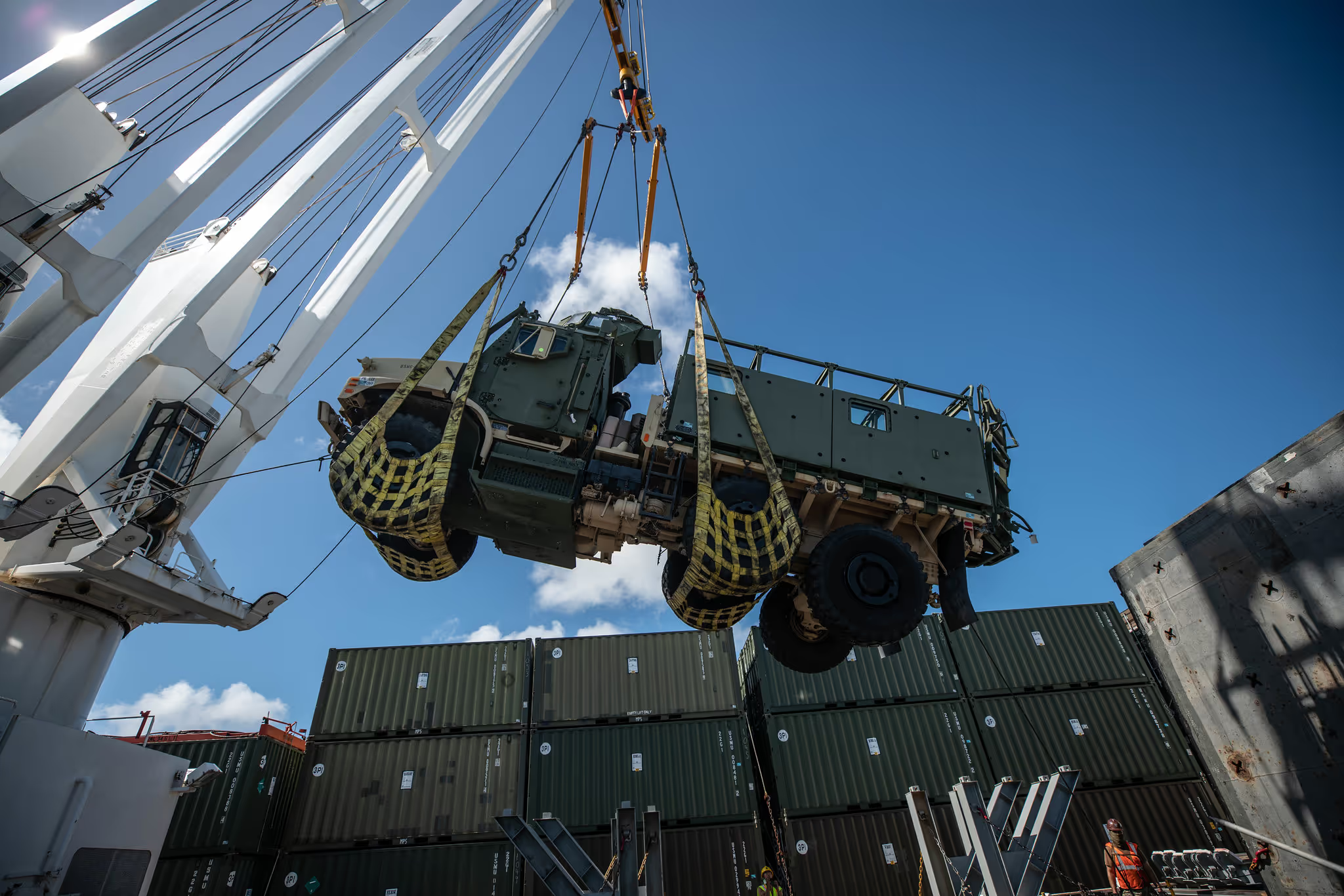
Helping Ukraine Is Forcing the United States to Produce More Weapons
Thinktanker Summary
AI-assisted summary reviewed by Thinktanker. While reasonable care is taken, errors may occur. Refer to the original source text for full accuracy.
  • The U.S. is increasing its production of artillery rounds, with plans to produce more than 80,000 rounds per month next year and potentially 100,000 shells per month by 2025.
  • Supporting Ukraine is pushing the American defense industrial base to produce high quantities of weapons in a short amount of time across various states.

Thinktanker Summary

  • The U.S. is increasing its production of artillery rounds, with plans to produce more than 80,000 rounds per month next year and potentially 100,000 shells per month by 2025.
  • Supporting Ukraine is pushing the American defense industrial base to produce high quantities of weapons in a short amount of time across various states.

Overview:

This report by Rebeccah L. Heinrichs at the Hudson Institute analyzes how the United States' support for Ukraine is driving an increase in weapons production. The need to deliver weapons to vulnerable allies like Ukraine has prompted Congress to purchase weapons more quickly and responsibly, which is expected to improve the U.S. military's ability to deter major power wars.

Key Points:

  1. The U.S. is increasing its production of artillery rounds, with plans to produce more than 80,000 rounds per month next year and potentially 100,000 shells per month by 2025.
  2. Supporting Ukraine is pushing the American defense industrial base to produce high quantities of weapons in a short amount of time across various states.

Highlights of Increased Production:

  • In Camden, Arkansas, Lockheed Martin is preparing to boost production of the High Mobility Artillery Rocket System (HIMARS) from 48 to 96 units per year.
  • In Lima, Ohio, General Dynamics is refurbishing and upgrading Abrams tanks, with the capacity to double its production to meet orders.
  • In Troy, Alabama, the facility producing Javelin anti-tank guided missiles plans to increase production from 2,100 units per year to 3,960 by 2026.
  • In Tucson, Arizona, production of Stinger shoulder-fire anti-aircraft missiles is expected to increase to 60 a month by 2025.
  • In Middletown, Iowa, the Iowa Army Ammunition Plant is slated to receive $1.2 billion in upgrades and plans to expand its workforce.
  • In Scranton, Pennsylvania, General Dynamics facilities are producing steel bodies for 155mm artillery shells, with a goal to produce 100,000 shells per month by 2025.

What They Discuss:

  • The article highlights the significant ramp-up in U.S. weapons production in response to the war in Ukraine.
  • It details the specific increases in production capacity for various weapon systems across different states.
  • The article underscores the strategic importance of this increased production for U.S. defense capabilities and support for allies.

Key Takeaways:

  • The U.S. defense industrial base is undergoing a significant expansion to meet the demands of supporting Ukraine and other allies.
  • This increase in weapons production is seen as crucial for enhancing the U.S. military's deterrence capabilities.
  • The article illustrates the broad impact of the conflict in Ukraine on U.S. defense manufacturing and strategic planning.

This is a brief overview of the report from the Hudson Institute. For complete insights, we recommend reading the full report.


Helping Ukraine Is Forcing the United States to Produce More Weapons

  • The U.S. is increasing its production of artillery rounds, with plans to produce more than 80,000 rounds per month next year and potentially 100,000 shells per month by 2025.
  • Supporting Ukraine is pushing the American defense industrial base to produce high quantities of weapons in a short amount of time across various states.
Conservative

Every think tank. One newsletter.

Your new weekly briefing - curated from America’s top think tanks on Substack.

Your Think Tank Sidecar

Save and curate your own Readlists, create your own Dashboards, and more.
Got it