TOPIC

Ukraine-Russia War

9
articles
Count

Feature

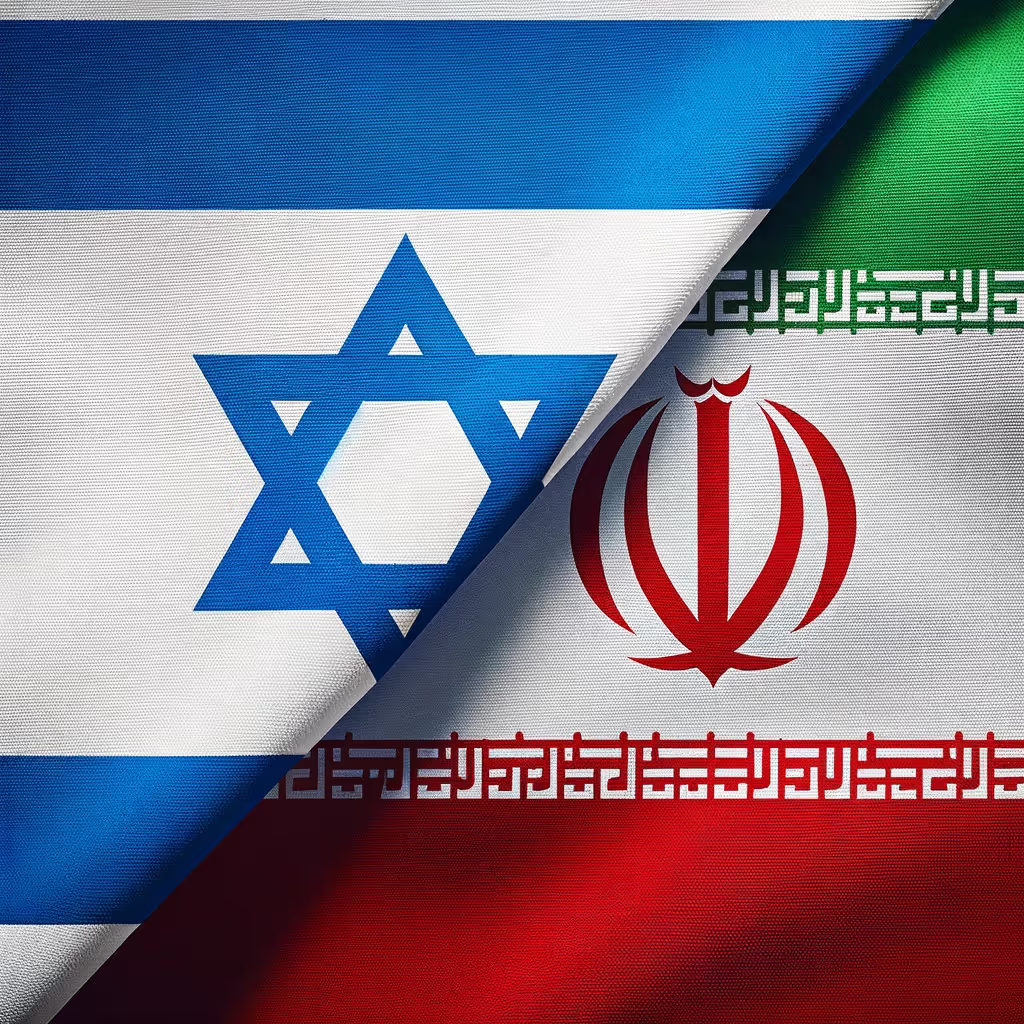
The Gaza War Has Convinced Russia It Was Right All Along
  • Carnegie Endowment expert Nikita Smagin writes that the Gaza conflict has reinforced Russia's belief in the correctness of its foreign policy approach, particularly in relation to the Western-centric international system.
  • Russia views the conflict as an opportunity to further its geopolitical interests, especially amidst the ongoing war in Ukraine.
Liberal
January 14, 2024

The Gaza War Has Convinced Russia It Was Right All Along

  • Carnegie Endowment expert Nikita Smagin writes that the Gaza conflict has reinforced Russia's belief in the correctness of its foreign policy approach, particularly in relation to the Western-centric international system.
  • Russia views the conflict as an opportunity to further its geopolitical interests, especially amidst the ongoing war in Ukraine.
Liberal

More on:

Ukraine-Russia War
Topics
Jan 13, 2024
Don’t Hold Up Israel Aid to Further Ukraine War Funding
Thinktanker Summary
AI-assisted summary reviewed by Thinktanker. While reasonable care is taken, errors may occur. Refer to the original source text for full accuracy.
  • Heritage Foundation scholars emphasize that the U.S. should not compromise its support for Israel, a key ally in the Middle East, in favor of additional funding for Ukraine.
  • The commentary highlights the distinct nature of the conflicts in Ukraine and Israel and the need for separate responses.

Thinktanker Summary

  • Heritage Foundation scholars emphasize that the U.S. should not compromise its support for Israel, a key ally in the Middle East, in favor of additional funding for Ukraine.
  • The commentary highlights the distinct nature of the conflicts in Ukraine and Israel and the need for separate responses.

Overview:

This commentary by Kevin D. Roberts, Ph.D., President, and J.D. Vance, U.S. Senator for Ohio, published by The Heritage Foundation, discusses the issue of U.S. aid to Israel in the context of the Ukraine war funding. The authors argue against holding up Israel's aid to further support Ukraine's war efforts.

  • They emphasize that the U.S. should not compromise its support for Israel, a key ally in the Middle East, in favor of additional funding for Ukraine.
  • The commentary highlights the distinct nature of the conflicts in Ukraine and Israel and the need for separate responses.

Key Quotes:

  1. "Having failed to force through more Ukraine funding by tying it to disaster relief for Americans, Senate leadership is now using the crisis in Israel as a 'Plan B' to get the Biden administration’s funding request across the finish line."
  2. "America cannot project strength abroad unless we are truly strong at home. Today, we honor this founding principle by standing with Israel."

What They Discuss:

  • The recent terrorist attack by Hamas against Israel, resulting in significant casualties, including American citizens.
  • The need for U.S. military support for Israel to respond to the escalating war and defend its people.
  • The assertion that the U.S. focus on Ukraine has come at the expense of other allies like Israel and Taiwan.
  • The strategic importance of Israel as a democratic U.S. partner compared to Ukraine's situation.
  • The need for a clear strategy and transparency in U.S. foreign involvement, especially considering domestic challenges and limited resources.​

What They Recommend:

  • Congress should debate and vote on the situation in Israel separately from Ukraine funding.
  • The U.S. should focus on securing its own borders and fully enforcing immigration laws, considering threats from terrorist organizations.
  • Conservatives should insist on strengthening the U.S. domestic industrial base and defending strategic interests.
  • The U.S. should stand with Israel in its time of need, honoring the principle of "peace through strength."

Key Takeaways:

  • The commentary calls for a balanced approach in U.S. foreign policy, ensuring that support for Israel is not compromised by the focus on Ukraine.
  • It highlights the importance of differentiating responses to distinct international conflicts.
  • The authors urge the U.S. to maintain its commitment to key allies and prioritize national security interests.​

This is a brief overview of the commentary from The Heritage Foundation. For complete insights, we recommend reading the full article.
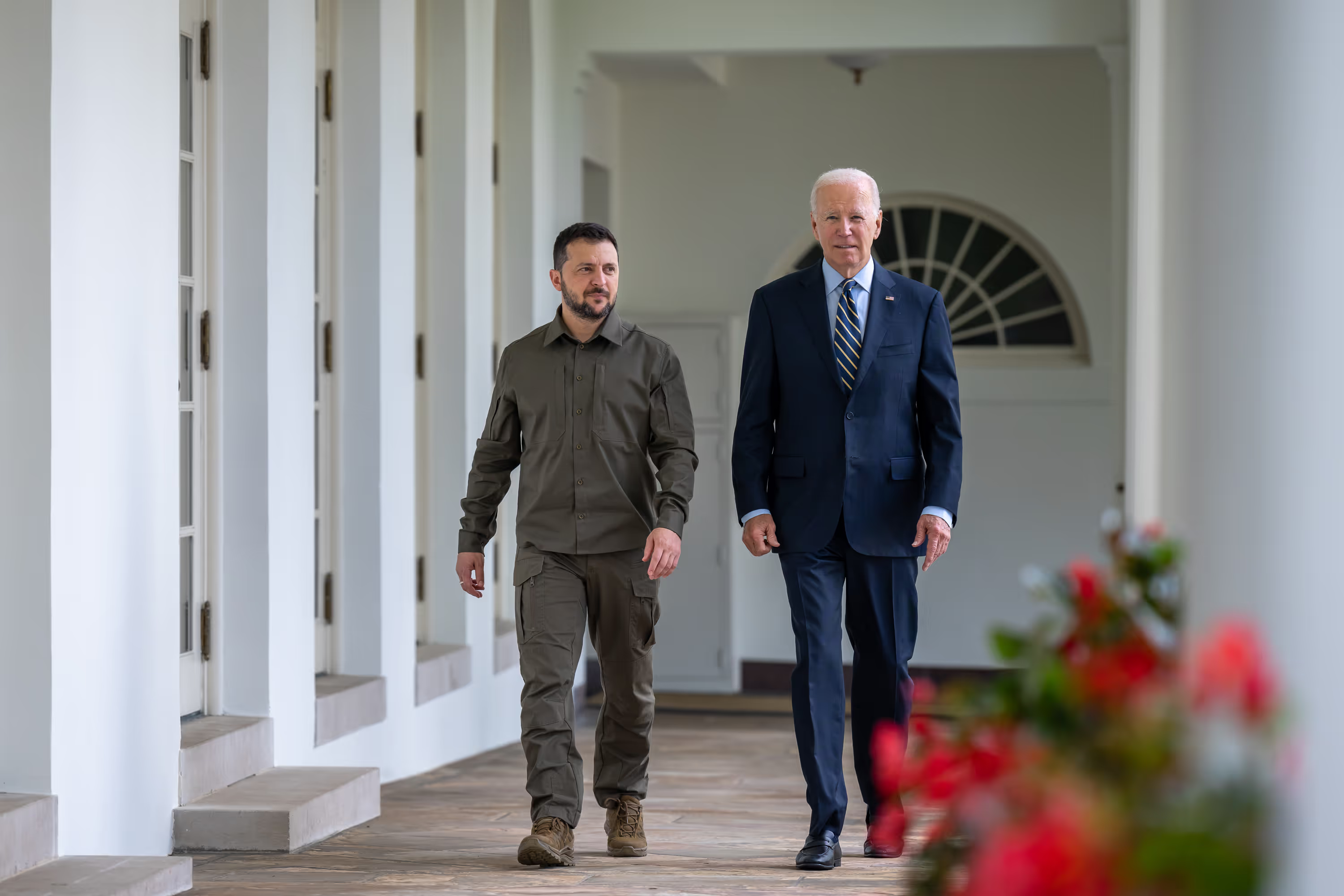
Don’t Hold Up Israel Aid to Further Ukraine War Funding

  • Heritage Foundation scholars emphasize that the U.S. should not compromise its support for Israel, a key ally in the Middle East, in favor of additional funding for Ukraine.
  • The commentary highlights the distinct nature of the conflicts in Ukraine and Israel and the need for separate responses.
Conservative
Topics
Jan 13, 2024
Biden Has Massively Overdrawn America’s Account with Blank Checks to Ukraine
Thinktanker Summary
AI-assisted summary reviewed by Thinktanker. While reasonable care is taken, errors may occur. Refer to the original source text for full accuracy.
  • The Biden administration's latest request for $61 billion for Ukraine would bring the total U.S. support since 2022 to nearly $200 billion.
  • The authors question the feasibility of a Ukrainian victory and the U.S.'s ability to sustain financial support given its fiscal challenges.|

Thinktanker Summary

  • The Biden administration's latest request for $61 billion for Ukraine would bring the total U.S. support since 2022 to nearly $200 billion.
  • The authors question the feasibility of a Ukrainian victory and the U.S.'s ability to sustain financial support given its fiscal challenges.|

Overview:

This commentary piece by Justin Logan and Dan Caldwell at the Cato Institute critiques President Biden's approach to supporting Ukraine, arguing that the United States has overextended its resources. They assert that the Biden administration's request for additional funding for Ukraine is unsustainable given the U.S.'s fiscal position and the uncertain prospects of a Ukrainian victory.

Key Points:

  1. The Biden administration's latest request for $61 billion for Ukraine would bring the total U.S. support since 2022 to nearly $200 billion.
  2. The authors question the feasibility of a Ukrainian victory and the U.S.'s ability to sustain financial support given its fiscal challenges.|

Key Quotes:

  1. "The Biden administration continues to publicly advance the delusion that Ukraine can achieve a total and decisive victory against Russia."
  2. "Interest on the debt is now roughly $1 trillion per year, the national debt itself is at almost $34 trillion, and the budget deficit each year is some $1.5 trillion and expected to jump to almost $3 trillion by 2033."

What They Discuss:

  • The impact of U.S. support for Ukraine on the country's ammunition stockpiles and its ability to support other allies.
  • The challenges in achieving a meaningful Ukrainian breakthrough against Russia in the near term.
  • The risks of escalating the conflict in Ukraine and the high rates of munition expenditure.
  • The dire U.S. fiscal position, including a growing national debt and budget deficit, which makes continued support for Ukraine unsustainable.

What They Recommend:

  • Congress should reject the latest funding request for Ukraine due to the lack of a clear plan for victory and the U.S.'s precarious fiscal position.
  • The U.S. should reconsider its approach to the conflict in Ukraine, focusing on diplomatic solutions rather than continued military support.​

Key Takeaways:

  • The commentary highlights the fiscal and strategic challenges of the U.S.'s continued support for Ukraine.
  • It emphasizes the need for a reassessment of U.S. foreign policy priorities and fiscal responsibilities.
  • The authors argue for a more cautious approach to international conflicts, considering the U.S.'s domestic fiscal challenges.​

This is a brief overview of the commentary from the Cato Institute. For complete insights, we recommend reading the full article.

Biden Has Massively Overdrawn America’s Account with Blank Checks to Ukraine

  • The Biden administration's latest request for $61 billion for Ukraine would bring the total U.S. support since 2022 to nearly $200 billion.
  • The authors question the feasibility of a Ukrainian victory and the U.S.'s ability to sustain financial support given its fiscal challenges.|
Libertarian
Topics
Jan 13, 2024
The Gaza War Has Convinced Russia It Was Right All Along
Thinktanker Summary
AI-assisted summary reviewed by Thinktanker. While reasonable care is taken, errors may occur. Refer to the original source text for full accuracy.
  • Carnegie Endowment expert Nikita Smagin writes that the Gaza conflict has reinforced Russia's belief in the correctness of its foreign policy approach, particularly in relation to the Western-centric international system.
  • Russia views the conflict as an opportunity to further its geopolitical interests, especially amidst the ongoing war in Ukraine.

Thinktanker Summary

  • Carnegie Endowment expert Nikita Smagin writes that the Gaza conflict has reinforced Russia's belief in the correctness of its foreign policy approach, particularly in relation to the Western-centric international system.
  • Russia views the conflict as an opportunity to further its geopolitical interests, especially amidst the ongoing war in Ukraine.

Overview:

This article was written by Nikita Smagin, offering a comprehensive analysis of Russia's foreign policy in light of the Gaza War. 

  • The Gaza conflict has reinforced Russia's belief in the correctness of its foreign policy approach, particularly in relation to the Western-centric international system.
  • Russia views the conflict as an opportunity to further its geopolitical interests, especially amidst the ongoing war in Ukraine.

Key Quotes:

  • "The conflict in the Middle East is the perfect crisis for Russia, which is reaping a whole host of political benefits."
  • "Moscow’s bet on the disintegration of a Western-oriented international order appears to be paying off."

What They Discuss:

  • The article discusses how the Gaza War has led to a resurgence of internal Western disagreements, particularly in Europe's stance towards Israel.
  • It highlights societal divisions and discontent among U.S. officials regarding America's pro-Israel stance.
  • The piece notes the impact of the Gaza conflict on shifting international focus away from the Ukraine war.
  • Smagin addresses the perceived hypocrisy in the West's approach to conflicts in Ukraine and Gaza, affecting its credibility in the Global South.
  • The article examines Russia's cautious stance in the Middle East, balancing its interests with Iran and its position on Israel.​

What They Recommend:

  • The author suggests that Russia will likely remain a passive actor in the Israel-Hamas conflict, avoiding direct involvement.
  • Russia will likely maintain a balance in its Middle East policy, considering public opinion and its international relationships.

Key Takeaways:

  • The Gaza War has solidified Russia's belief in its foreign policy direction, emphasizing state interests over moral or ideological considerations.
  • Russia's approach to the conflict illustrates its strategic use of international crises to advance its geopolitical agenda.
  • The conflict has exposed and possibly widened rifts within Western alliances, offering Russia potential strategic advantages.

This is a brief overview of Nikita Smagin's work from the Carnegie Endowment for International Peace. For complete insights, we recommend reading the full article.


The Gaza War Has Convinced Russia It Was Right All Along

  • Carnegie Endowment expert Nikita Smagin writes that the Gaza conflict has reinforced Russia's belief in the correctness of its foreign policy approach, particularly in relation to the Western-centric international system.
  • Russia views the conflict as an opportunity to further its geopolitical interests, especially amidst the ongoing war in Ukraine.
Liberal

Every think tank. One newsletter.

Your new weekly briefing - curated from America’s top think tanks on Substack.

Your Think Tank Sidecar

Save and curate your own Readlists, create your own Dashboards, and more.
Got it