
TOPIC

War in Israel-Gaza

11
articles
Count

Feature

Extremist Israeli settlers are nonstate armed actors
  • Brookings expert Jeffrey Feltman discuss the escalating violence by extremist Israeli settlers against Palestinian civilians in the West Bank and the implications for the Israeli-Palestinian conflict.
  • He argues that these Israeli settlers should be considered nonstate armed actors (NSAA) and suggests that the U.S. should take stronger actions against them, similar to measures used against Palestinian terrorism.
Leans Left
January 20, 2024

Extremist Israeli settlers are nonstate armed actors

  • Brookings expert Jeffrey Feltman discuss the escalating violence by extremist Israeli settlers against Palestinian civilians in the West Bank and the implications for the Israeli-Palestinian conflict.
  • He argues that these Israeli settlers should be considered nonstate armed actors (NSAA) and suggests that the U.S. should take stronger actions against them, similar to measures used against Palestinian terrorism.
Leans Left

More on:

War in Israel-Gaza
Topics
Jan 13, 2024
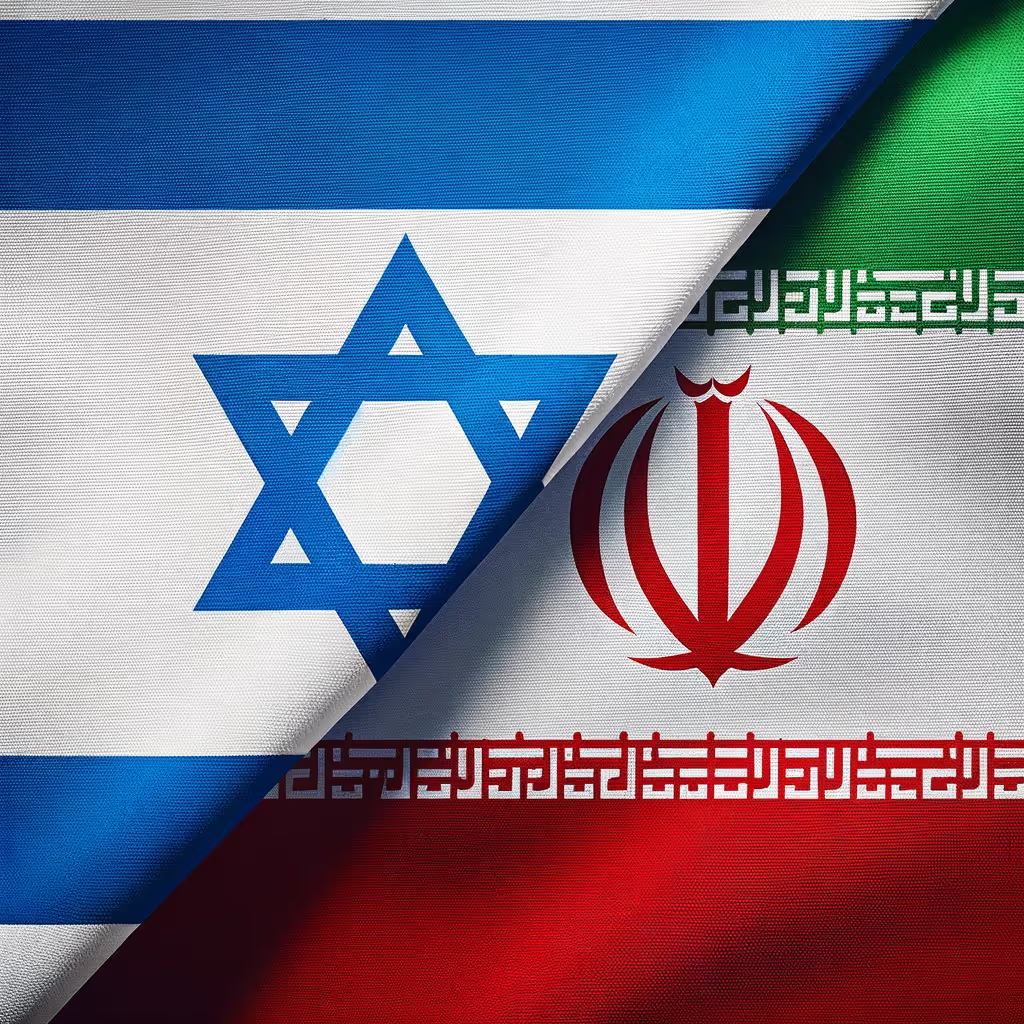
Assessing Israel’s Strike on Iran
Thinktanker Summary
AI-assisted summary reviewed by Thinktanker. While reasonable care is taken, errors may occur. Refer to the original source text for full accuracy.
  • Israel conducted a precision strike on an Iranian air defense system, signaling its capability and restraint to avoid broader conflict.
  • The attack was a response to an unprecedented direct missile and drone attack by Iran on Israeli soil, marking a significant escalation in their long-standing tensions.

Thinktanker Summary

  • Israel conducted a precision strike on an Iranian air defense system, signaling its capability and restraint to avoid broader conflict.
  • The attack was a response to an unprecedented direct missile and drone attack by Iran on Israeli soil, marking a significant escalation in their long-standing tensions.

Overview:

This article was written by Alexander Palmer, Daniel Byman, Seth G. Jones, and Joseph S. Bermudez Jr., analyzing a recent military engagement between Israel and Iran.

  • Israel conducted a precision strike on an Iranian air defense system, signaling its capability and restraint to avoid broader conflict.
  • The attack was a response to an unprecedented direct missile and drone attack by Iran on Israeli soil, marking a significant escalation in their long-standing tensions.

Key Quotes:

  • "Israel walked a tightrope between escalating the conflict further and inaction, while also signaling to Tehran that it could conduct precision strikes against strategic locations."
  • "The strike minimized this fear by targeting only the shortest-range radar in Iran’s air defense complex, designed not to locate threats but to guide interceptor missiles to their target."

What They Discuss:

  • The Israeli strike on April 19 targeted an S-300 air defense system part in Isfahan, which is strategically important due to its proximity to Iran’s Natanz nuclear enrichment facility.
  • The strike was calibrated to deter further escalation by destroying only a single engagement radar, which was quickly replaced by Iran.
  • Iran's initial attack on April 13 involved over 300 missiles and drones, the first direct assault from Iranian soil against Israel.
  • The incident reflects ongoing tension and the potential for escalation, influenced by internal political pressures in both Israel and Iran.
  • Both nations showed restraint to avoid a full-scale war, although future provocations could disrupt this delicate balance.

What They Recommend:

  • Continued vigilance and preparedness for rapid escalation in response to geopolitical developments in the region.
  • Engagement in diplomatic efforts to mitigate the risks of further military confrontations.

Key Takeaways:

  • The incident underscores the fragile nature of regional stability and the potential for minor incidents to escalate into significant conflicts.
  • Israel’s strategy of measured military responses aims to maintain a balance between deterrence and outright war.
  • The political dynamics within both Israel and Iran play crucial roles in shaping their military engagements.

Disclaimer:

This is a brief overview of the work by Alexander Palmer, Daniel Byman, Seth G. Jones, and Joseph S. Bermudez Jr. from the Center for Strategic and International Studies (CSIS). For complete insights, we recommend reading the full article.
Assessing Israel’s Strike on Iran

  • Israel conducted a precision strike on an Iranian air defense system, signaling its capability and restraint to avoid broader conflict.
  • The attack was a response to an unprecedented direct missile and drone attack by Iran on Israeli soil, marking a significant escalation in their long-standing tensions.

Centrist
Topics
Jan 13, 2024
The hard truth about Biden’s coming retaliation for the killing of US troops
Thinktanker Summary
AI-assisted summary reviewed by Thinktanker. While reasonable care is taken, errors may occur. Refer to the original source text for full accuracy.
  • President Biden's public statements on the drone attack that killed 3 U.S. soldiers in Jordan shows the U.S. is keen to avoid war with Iran while focusing on Hezbollah's activities.
  • The drone attack represents a significant escalation, marking the first US military casualty by enemy air power since 1953 and prompting a strategic withdrawal of Hezbollah from aggressive engagements with US forces in Iraq and Syria.

Thinktanker Summary

  • President Biden's public statements on the drone attack that killed 3 U.S. soldiers in Jordan shows the U.S. is keen to avoid war with Iran while focusing on Hezbollah's activities.
  • The drone attack represents a significant escalation, marking the first US military casualty by enemy air power since 1953 and prompting a strategic withdrawal of Hezbollah from aggressive engagements with US forces in Iraq and Syria.

Overview: 

This commentary by Atlantic Council expert Kirsten Fontenrose examines the strategic dynamics between the United States, Kata'ib Hezbollah, and Iran, highlighting the recent developments that have led to a recalibration of KH's actions in the Middle East. It delves into the implications of a drone attack that killed three US soldiers in Jordan, the subsequent cessation of KH's attacks on US forces, and the broader context of US-Iran relations.

Key Points:

  • President Joe Biden's public statements have clarified the US stance on avoiding war with Iran while expressing a determined posture towards KH's activities.
  • The drone attack represents a significant escalation, marking the first US military casualty by enemy air power since 1953 and prompting a strategic withdrawal of KH from aggressive engagements with US forces in Iraq and Syria.
  • Iran's perception of US retaliation capabilities and its continued support for proxy forces like KH challenge the restoration of deterrence by the United States.

Policy Options for the US Response:

  1. Conduct Strikes Inside Iran Against IRGC Bases and Weapons Stockpiles: Targeting the Islamic Revolutionary Guard Corps (IRGC) could impact Iran's proxy capabilities but might not halt the types of attacks that have targeted US forces.
  2. Strikes Against Facilities Producing Proprietary Components for Proxies: Attacking production sites could slow proxy attacks but would not eliminate the stockpiled munitions already available to groups like KH.
  3. Conduct Strikes Against IRGC and Proxy Capabilities in Neighboring States: While this approach has been utilized, it has not deterred Iran or its proxies from continuing their operations against US personnel and interests.

Strategic Considerations:

  • The US must manage the potential reputational risks associated with retaliation, ensuring that any military action is perceived as non-escalatory and justified.
  • Securing regional support, particularly from Jordan, is crucial for legitimizing US actions and maintaining stability in the Middle East.
  • The US should clearly communicate its objectives and manage expectations regarding the effectiveness of military strikes in altering Iran's regional behavior.

Conclusion:

The US faces a complex challenge in responding to the recent escalation by KH and Iran. While military options are available, their effectiveness in achieving long-term strategic objectives may be limited. A multifaceted approach that includes diplomatic engagement, regional cooperation, and targeted military action, while managing the narrative around US responses, is essential for addressing the immediate threats and contributing to stability in the Middle East. The situation underscores the importance of a nuanced understanding of the regional dynamics and the need for a calibrated US strategy that addresses the root causes of proxy aggression without escalating tensions further.

The hard truth about Biden’s coming retaliation for the killing of US troops

  • President Biden's public statements on the drone attack that killed 3 U.S. soldiers in Jordan shows the U.S. is keen to avoid war with Iran while focusing on Hezbollah's activities.
  • The drone attack represents a significant escalation, marking the first US military casualty by enemy air power since 1953 and prompting a strategic withdrawal of Hezbollah from aggressive engagements with US forces in Iraq and Syria.
Leans Right
Topics
Jan 13, 2024
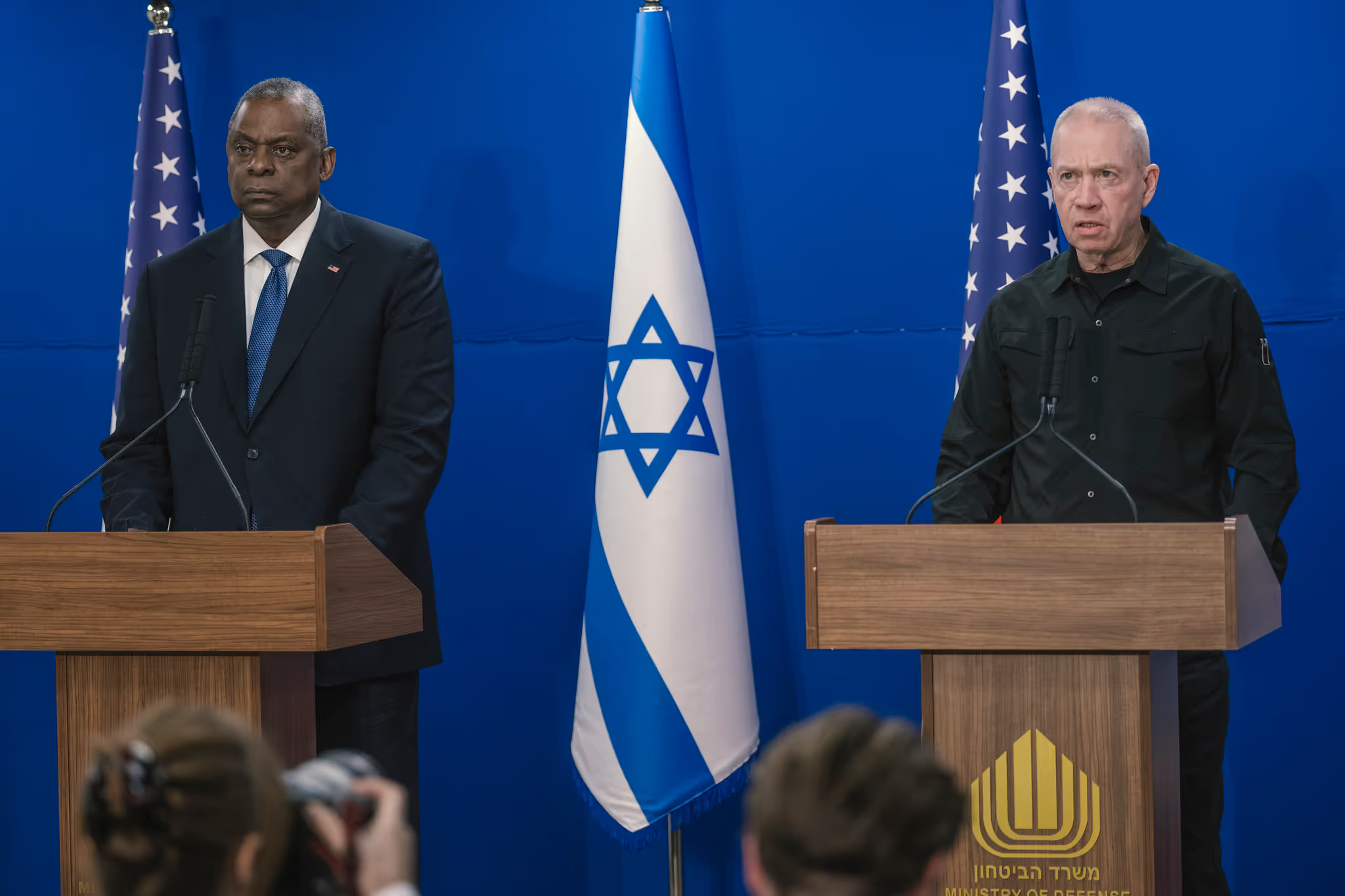
Israel-Hamas Conflict: 5 Actions Washington Should Prioritize Now
Thinktanker Summary
AI-assisted summary reviewed by Thinktanker. While reasonable care is taken, errors may occur. Refer to the original source text for full accuracy.
  • The U.S. should prioritize negotiating a humanitarian ceasefire in the Israel-Hamas conflict and ensure robust humanitarian aid to Gaza, while supporting Israel's defense needs without contributing to collective punishment against Palestinians.
  • It's important for the U.S. to enforce policies on civilian protection and human rights in the conflict, and to lead diplomatic efforts for a political solution that fosters lasting peace between Israelis and Palestinians.

Thinktanker Summary

  • The U.S. should prioritize negotiating a humanitarian ceasefire in the Israel-Hamas conflict and ensure robust humanitarian aid to Gaza, while supporting Israel's defense needs without contributing to collective punishment against Palestinians.
  • It's important for the U.S. to enforce policies on civilian protection and human rights in the conflict, and to lead diplomatic efforts for a political solution that fosters lasting peace between Israelis and Palestinians.

Overview:

This article by Patrick Gaspard and Allison McManus at the Center for American Progress discusses the Israel-Hamas conflict and outlines five actions that Washington should prioritize in response to the situation. The article emphasizes the United States' obligation to support Israel's defense, while also advocating for a balanced approach that considers the humanitarian impact on Palestinians​

Key Points:

  1. The article calls for an immediate humanitarian ceasefire to address the catastrophic consequences for Palestinians in Gaza and to develop a long-term strategy to combat Hamas.
  2. It highlights the need for the United States to support Israel’s defense needs, particularly in light of Hamas' terror attack on Israeli civilians.

Key Quotes:

  1. "The United States has an unshakeable obligation to Israel. But being tethered to Israel is not the same as granting absolute proxy to a discredited Netanyahu to conduct wide-scale warfare."
  2. "The United States must support Israel’s efforts to defend its citizens against these attacks by providing critical funding to maintain the country’s Iron Dome system and deliver other defense assets."

What They Discuss:

  • The need for a negotiated ceasefire to allow for humanitarian aid and a clearer long-term strategy.
  • Support for Israel's defense needs while ensuring that U.S. assistance does not contribute to collective punishment against Palestinians.
  • The importance of protecting humanitarian assistance to the people of Gaza and funding long-term efforts to rebuild the region.
  • The necessity for compliance with U.S. policies on civilian protection and human rights in the use of American weapons.
  • The role of U.S. diplomacy in advancing a political solution and the need for new leadership in Israel and Palestine.

What They Recommend:

  • Urging an immediate humanitarian ceasefire to alleviate the situation in Gaza.
  • Supporting Israel's defense needs while making clear that collective punishment against Palestinians is counterproductive.
  • Protecting and funding robust humanitarian assistance programs for Gaza.
  • Ensuring that arms transfers to Israel adhere to U.S. laws and policies on civilian protection and human rights.
  • Centering U.S. diplomacy to advance a political solution that can deliver lasting peace for Israelis and Palestinians.

Key Takeaways:

  • The article underscores the complexity of the Israel-Hamas conflict and the need for a balanced U.S. response.
  • It highlights the importance of addressing both the defense needs of Israel and the humanitarian crisis in Gaza.
  • The recommendations focus on diplomatic efforts, humanitarian aid, and a strategic approach to military support.

This is a brief overview of the article from the Center for American Progress. For complete insights, we recommend reading the full article.
Israel-Hamas Conflict: 5 Actions Washington Should Prioritize Now

  • The U.S. should prioritize negotiating a humanitarian ceasefire in the Israel-Hamas conflict and ensure robust humanitarian aid to Gaza, while supporting Israel's defense needs without contributing to collective punishment against Palestinians.
  • It's important for the U.S. to enforce policies on civilian protection and human rights in the conflict, and to lead diplomatic efforts for a political solution that fosters lasting peace between Israelis and Palestinians.
Progressive
Topics
Jan 13, 2024
The Painful Lesson: Defense Is Not Enough
Thinktanker Summary
AI-assisted summary reviewed by Thinktanker. While reasonable care is taken, errors may occur. Refer to the original source text for full accuracy.
  • Hudson scholar John P. Walters writes that the October 7 attacks in Israel by Hamas showcases the need for a more proactive approach to deterrence beyond passive defense strategies.
  • Walters criticizes U.S. policy towards Israel, suggesting it has encouraged a passive defense approach and hindered proactive deterrence.

Thinktanker Summary

  • Hudson scholar John P. Walters writes that the October 7 attacks in Israel by Hamas showcases the need for a more proactive approach to deterrence beyond passive defense strategies.
  • Walters criticizes U.S. policy towards Israel, suggesting it has encouraged a passive defense approach and hindered proactive deterrence.

Overview:

This article by John P. Walters discusses the aftermath and implications of the October 7 attacks in Israel by Hamas. Key insights include:

  • The attacks have led to a significant shift in Israeli perception and response to security threats.
  • The need for a more proactive approach to deterrence beyond passive defense strategies.

Key Quotes:

  1. "The terrorist forces need to be contained, weakened, and destroyed."
  2. "Passive defense is not deterrence."

What They Discuss:

  • The impact of the October 7 attacks on the Israeli community, particularly in Kfar Aza, where the attacks caused significant trauma and displacement.
  • The broader implications of these attacks for Israel's national security, highlighting the threats from Hamas in Gaza and Hezbollah in Lebanon.
  • The need for Israel to actively pursue deterrence, moving beyond reliance on passive defense strategies like the Iron Dome.
  • Criticism of the U.S. policy towards Israel, suggesting it has encouraged a passive defense approach and hindered proactive deterrence.
  • The call for a strategic awakening in America to recognize the need for active deterrence in partnership with Israel.​

What They Recommend:

  • A shift in Israeli defense strategy from passive to active deterrence.
  • The need for Israel to take more assertive actions to counter threats from terrorist organizations.
  • A reevaluation of U.S. foreign policy towards Israel, advocating for support of more proactive Israeli defense measures.​

Key Takeaways:

  • The October 7 attacks have been a turning point in Israeli security policy, highlighting the limitations of passive defense.
  • There is a growing consensus in Israel on the need for a more active approach to deterrence and security.
  • The article calls for a rethinking of U.S. policy towards Israel, emphasizing the importance of active deterrence and stronger U.S.-Israel cooperation in security matters.

This is a brief overview of John P. Walters's work from the Hudson Institute. For complete insights, we recommend reading the full article.

The Painful Lesson: Defense Is Not Enough

  • Hudson scholar John P. Walters writes that the October 7 attacks in Israel by Hamas showcases the need for a more proactive approach to deterrence beyond passive defense strategies.
  • Walters criticizes U.S. policy towards Israel, suggesting it has encouraged a passive defense approach and hindered proactive deterrence.
Conservative
Topics
Jan 14, 2024
Is US security dependent on limiting China’s economic growth?
Thinktanker Summary
AI-assisted summary reviewed by Thinktanker. While reasonable care is taken, errors may occur. Refer to the original source text for full accuracy.
  • This written debate by Brookings experts dives into whether U.S. security is dependent on limiting China's economic growth.
  • The U.S. should focus on countering China's economic tactics rather than explicitly aiming to slow its growth. Policies should be developed to protect U.S. interests, particularly in technology and innovation sectors.

Thinktanker Summary

  • This written debate by Brookings experts dives into whether U.S. security is dependent on limiting China's economic growth.
  • The U.S. should focus on countering China's economic tactics rather than explicitly aiming to slow its growth. Policies should be developed to protect U.S. interests, particularly in technology and innovation sectors.

Overview:

This written debate by Brookings experts, Cameron F. Kerry, Mary E. Lovely, Pavneet Singh, Liza Tobin, Ryan Hass, Patricia M. Kim, and Emilie Kimball, dives into whether U.S. security is dependent on limiting China's economic growth.

  • The debate explores the complexities of the U.S.-China relationship, focusing on economic, diplomatic, military, and technological aspects.
  • It examines the implications of China's growth strategies and the potential responses by the United States.​

Key Quotes:

  1. "It is not the People’s Republic of China’s (PRC) economic growth, per se, that poses a risk to U.S. national security, but rather the zero-sum means by which the regime in Beijing continues to achieve that growth, as well as the autocratic end goals that growth facilitates." - Liza Tobin
  2. "The time when the United States alone had the power to shape the trajectory of Chinese economic growth is long past." - Cameron F. Kerry

What They Discuss:

  • The debate addresses whether China’s economic growth presents a risk to America’s national security and if the U.S. should act to limit this growth.
  • It discusses the impact of China's economic tactics on global supply chains and market competition.
  • The experts consider the effectiveness of U.S. policies aimed at countering China's economic strategies.
  • They explore the potential consequences of slowing China's growth on U.S. interests and global stability.
  • The article also delves into the strategic importance of technology and innovation in the U.S.-China competition.

What They Recommend:

  • The U.S. should focus on countering China's economic tactics rather than explicitly aiming to slow its growth.
  • Policies should be developed to protect U.S. interests, particularly in technology and innovation sectors.
  • The U.S. needs to bolster its economic strengths and correct existing misalignments to compete effectively with China.
  • A more nuanced and targeted approach towards China is recommended, differentiating between China's rise and specific policies of concern.​

Key Takeaways:

  • The debate highlights the complexity of the U.S.-China economic and strategic relationship.
  • It underscores the need for the U.S. to adapt its policies to effectively manage and compete with China's growing influence.
  • The recommendations suggest a strategic focus on protecting U.S. interests and enhancing competitiveness in key areas.​

This is a brief overview of the debate hosted by Brookings. For complete insights, we recommend reading the full article.

Is US security dependent on limiting China’s economic growth?

  • This written debate by Brookings experts dives into whether U.S. security is dependent on limiting China's economic growth.
  • The U.S. should focus on countering China's economic tactics rather than explicitly aiming to slow its growth. Policies should be developed to protect U.S. interests, particularly in technology and innovation sectors.
Leans Left
Topics
Jan 14, 2024
Extremist Israeli settlers are nonstate armed actors
Thinktanker Summary
AI-assisted summary reviewed by Thinktanker. While reasonable care is taken, errors may occur. Refer to the original source text for full accuracy.
  • Brookings expert Jeffrey Feltman discuss the escalating violence by extremist Israeli settlers against Palestinian civilians in the West Bank and the implications for the Israeli-Palestinian conflict.
  • He argues that these Israeli settlers should be considered nonstate armed actors (NSAA) and suggests that the U.S. should take stronger actions against them, similar to measures used against Palestinian terrorism.

Thinktanker Summary

  • Brookings expert Jeffrey Feltman discuss the escalating violence by extremist Israeli settlers against Palestinian civilians in the West Bank and the implications for the Israeli-Palestinian conflict.
  • He argues that these Israeli settlers should be considered nonstate armed actors (NSAA) and suggests that the U.S. should take stronger actions against them, similar to measures used against Palestinian terrorism.

Overview:

The article from Brookings expert Jeffrey Feltman discusses the escalating violence by extremist Israeli settlers against Palestinian civilians in the West Bank and the implications for the Israeli-Palestinian conflict. It argues that these settlers should be considered nonstate armed actors (NSAA) and suggests that the U.S. should take stronger actions against them, similar to measures used against Palestinian terrorism.​

Key Points:

  1. The article highlights the increase in violence by extremist Israeli settlers in the West Bank, particularly after the October 7 terrorist attack by Hamas.
  2. It notes that the U.S. has announced visa restrictions against Israelis and Palestinians undermining peace in the West Bank, but argues that more action is needed.
  3. The article suggests that the U.S. should treat extremist Israeli settlers as NSAA and employ mechanisms like freezing financial accounts and imposing sanctions.
  4. It proposes widening the target net to include American citizens involved in group attacks on Palestinian civilians and seizing assets of U.S.-based groups funding extremist settler groups.
  5. The article also recommends building coalitions with like-minded countries to coordinate multinational measures against extremist settler violence.​

What They Discuss:

  • Extremist Israeli settlers aim to drive Palestinians out of the West Bank, particularly from Area C, which is under full Israeli civilian and military control.
  • The Israeli government, particularly under the current Netanyahu administration, has been accused of endorsing the goals of these settlers and failing to prosecute them for attacks on Palestinians.
  • The article argues that the actions of these settlers constitute ethnic cleansing and pose a risk of igniting a third Palestinian intifada.

What They Recommend:

  • The U.S. should expand its mechanisms used against Palestinian terrorism to include actions against extremist Israeli settler groups.
  • Measures could include freezing financial accounts, imposing sanctions, and seizing assets of groups funding the violence.
  • The U.S. should collaborate with international partners to build coalitions against settler violence and hold Israeli government officials accountable if they aid and abet such violence.

This is a brief overview of the article from Brookings on extremist Israeli settlers as nonstate armed actors. For complete insights, we recommend reading the full article.


Extremist Israeli settlers are nonstate armed actors

  • Brookings expert Jeffrey Feltman discuss the escalating violence by extremist Israeli settlers against Palestinian civilians in the West Bank and the implications for the Israeli-Palestinian conflict.
  • He argues that these Israeli settlers should be considered nonstate armed actors (NSAA) and suggests that the U.S. should take stronger actions against them, similar to measures used against Palestinian terrorism.
Leans Left

Every think tank. One newsletter.

Your new weekly briefing - curated from America’s top think tanks on Substack.

Your Think Tank Sidecar

Save and curate your own Readlists, create your own Dashboards, and more.
Got it