

.avif)


.avif)
.avif)


















.avif)






Search Insights
.avif)
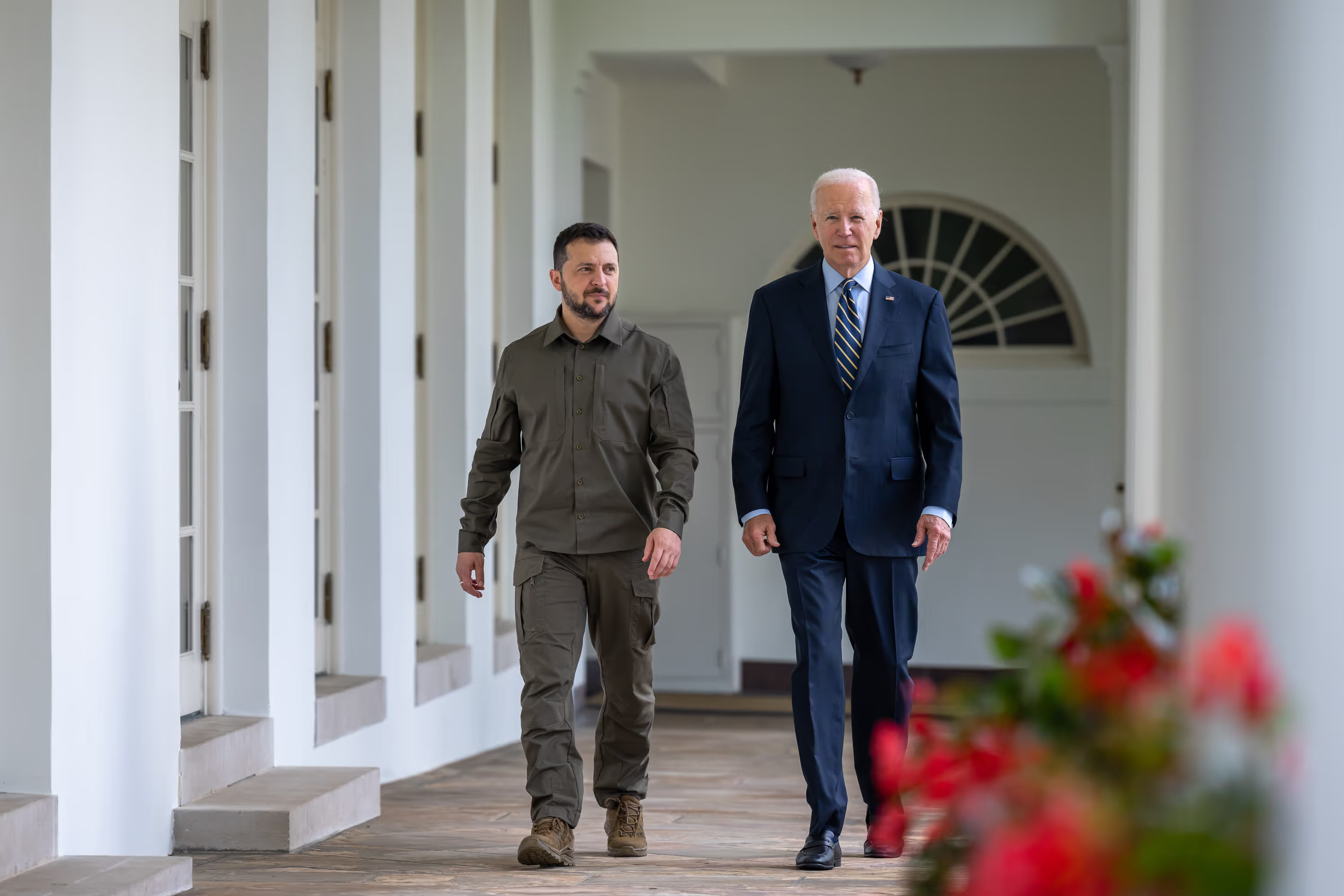
Ukraine presents a strategic economic opportunity for the United States, particularly as the nation is rich in critical minerals and advanced technology sectors. Investing in Ukraine not only enhances economic ties but also fortifies U.S. national security interests amid geopolitical tensions, per commentary from Council on Foreign Relations.
Ukraine presents a strategic economic opportunity for the United States, particularly as the nation is rich in critical minerals and advanced technology sectors. Investing in Ukraine not only enhances economic ties but also fortifies U.S. national security interests amid geopolitical tensions, per commentary from Council on Foreign Relations.
The issue:
Ukraine faces the challenge of protecting its valuable economic resources amidst ongoing conflict with Russia, which seeks to dominate its wealth. The country is estimated to hold $10 to $12 trillion in critical minerals, making it a significant player in both regional and global markets.
What they recommend:
Expert recommendations include establishing a comprehensive strategic partnership focused on critical minerals and defense manufacturing cooperation. Collaborating with Ukraine can support both U.S. interests and Ukraine's defense capabilities, creating a mutually beneficial relationship.
Go deeper:
Ukraine’s defense sector has rapidly evolved since the invasion, positioning it as a modern and competitive force capable of supplying NATO allies with affordable munitions. Its skills in IT and cybersecurity are becoming assets as it emerges as a “Mil-Tech Valley,” leading in dual-use technology. Securing Ukraine's resources would limit reliance on China and enhance U.S. resilience in critical supply chains.
This is a brief overview of a commentary from Council on Foreign Relations. For complete insights, we recommend reading the full commentary.

The Art of a Good Deal: Ukraine’s Strategic Economic Opportunity for the United States
Ukraine presents a strategic economic opportunity for the United States, particularly as the nation is rich in critical minerals and advanced technology sectors. Investing in Ukraine not only enhances economic ties but also fortifies U.S. national security interests amid geopolitical tensions, per commentary from Council on Foreign Relations.
Ukraine-Russia War
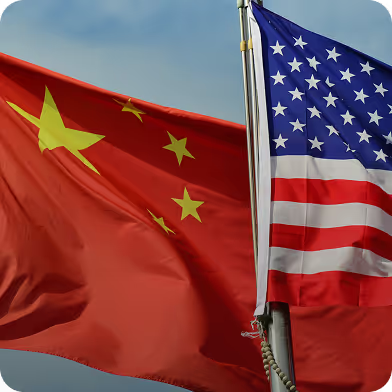
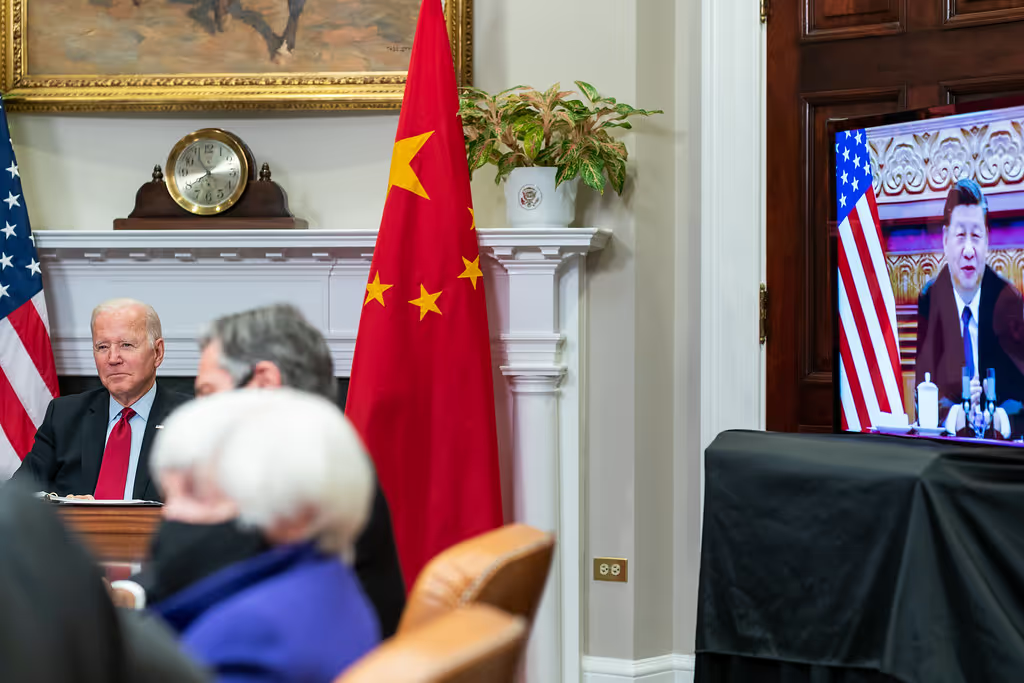
The U.S.-China relationship currently faces significant rivalry that impacts collaboration, yet history shows that even rivals can work together on shared challenges. Understanding and advancing methods for cooperation among nonstate actors will be critical for addressing major global issues, per commentary from Center for Strategic and International Studies.
The U.S.-China relationship currently faces significant rivalry that impacts collaboration, yet history shows that even rivals can work together on shared challenges. Understanding and advancing methods for cooperation among nonstate actors will be critical for addressing major global issues, per commentary from Center for Strategic and International Studies.
The issue:
Intensifying tensions between the United States and China threaten collaboration on essential global challenges. Current data shows public perception of China is increasingly negative, with 81% of Americans expressing an unfavorable view, the highest since 1989.
What they recommend:
No recommendations provided in the commentary.
Go deeper:
Insights from historical case studies reveal that coordinated efforts between rivals have succeeded when driven by mutual self-interest rather than goodwill. For example, U.S. and Soviet cooperation in smallpox eradication during the Cold War highlighted the political benefits of shared health goals. Such frameworks can inform contemporary U.S.-China engagement on issues like climate-smart agriculture.
This is a brief overview of an issue brief from Center for Strategic and International Studies. For complete insights, we recommend reading the full an issue brief.
Advancing U.S.-China Coordination amid Strategic Competition: An Emerging Playbook
The U.S.-China relationship currently faces significant rivalry that impacts collaboration, yet history shows that even rivals can work together on shared challenges. Understanding and advancing methods for cooperation among nonstate actors will be critical for addressing major global issues, per commentary from Center for Strategic and International Studies.
U.S.-China Relations
Per commentary from Center for American Progress, President-elect Trump faces pressure from corporate lobbyists to prioritize special interests at the expense of public lands. The proposed actions threaten the environmental protections that Trump previously disavowed during his campaign.
Per commentary from Center for American Progress, President-elect Trump faces pressure from corporate lobbyists to prioritize special interests at the expense of public lands. The proposed actions threaten the environmental protections that Trump previously disavowed during his campaign.
The issue:
The Trump administration's management of America's public lands is under scrutiny, as corporate lobbyists propose drastic changes that could benefit private interests. This raises concerns about the long-term impact on healthy ecosystems, local communities, and natural resources.
What they recommend:
No specific recommendations for action on this issue were provided in the report.
Go deeper:
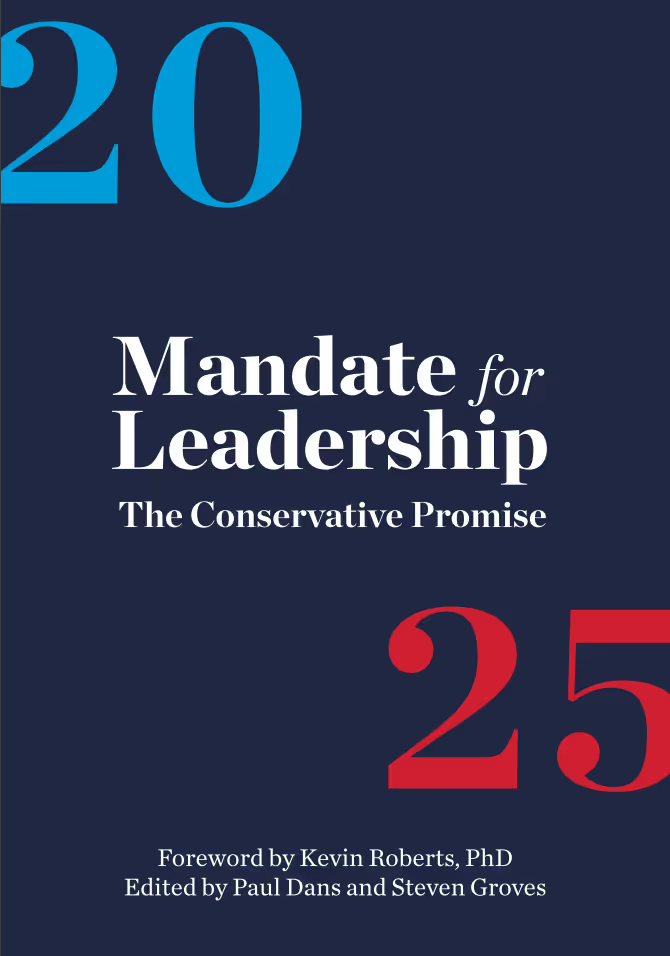
Many of the proposals align with Project 2025, which seeks to overturn critical environmental regulations and increase corporate access to public lands. Historically, public lands have been a vital resource for conservation and recreation, making the potential shift towards privatization a significant concern. The consequences of these actions could set a precedent that undermines environmental protections and public access for generations.
This is a brief overview of a report from Center for American Progress. For complete insights, we recommend reading the full report.
8 Ways Special Interests Are Asking President-Elect Trump To Sell Out U.S. Public Lands
Per commentary from Center for American Progress, President-elect Trump faces pressure from corporate lobbyists to prioritize special interests at the expense of public lands. The proposed actions threaten the environmental protections that Trump previously disavowed during his campaign.
2024 U.S. Elections
.avif)
Millions of people are at risk of losing health coverage or facing higher costs due to potential cuts in health programs proposed by a Republican-controlled Congress. Such changes may severely limit access to necessary medical care, affecting those with chronic conditions and low-income workers, per a policy brief from Center on Budget and Policy Priorities.
Millions of people are at risk of losing health coverage or facing higher costs due to potential cuts in health programs proposed by a Republican-controlled Congress. Such changes may severely limit access to necessary medical care, affecting those with chronic conditions and low-income workers, per a policy brief from Center on Budget and Policy Priorities.
The issue:
The challenge lies in proposed spending cuts that could remove health coverage from millions, particularly those relying on Medicaid and the Affordable Care Act (ACA). Currently, 100 million people depend on these programs, and cutting funds may limit essential services, especially for vulnerable populations.
Go deeper:
To mitigate the negative impacts, Congress should extend the current premium tax credit improvements to maintain affordability for marketplace enrollees. Additionally, closing the Medicaid coverage gap could help over 1.6 million uninsured adults gain access to health care. Streamlining the enrollment processes would also reduce coverage gaps for eligible individuals.
This is a brief overview of a policy brief from Center on Budget and Policy Priorities. For complete insights, we recommend reading the full a policy brief.
2025 Budget Stakes: Millions Could Lose Health Coverage or See Costs Rise
Millions of people are at risk of losing health coverage or facing higher costs due to potential cuts in health programs proposed by a Republican-controlled Congress. Such changes may severely limit access to necessary medical care, affecting those with chronic conditions and low-income workers, per a policy brief from Center on Budget and Policy Priorities.
Healthcare
.avif)
Tariffs on imports from Canada and Mexico could significantly undermine U.S. energy dominance by raising domestic energy prices and disrupting critical supply chains. These actions may drive U.S. trading partners to seek alternatives, diminishing American competitiveness in energy exports, per commentary from Atlantic Council.
Tariffs on imports from Canada and Mexico could significantly undermine U.S. energy dominance by raising domestic energy prices and disrupting critical supply chains. These actions may drive U.S. trading partners to seek alternatives, diminishing American competitiveness in energy exports, per commentary from Atlantic Council.
The issue:
Tariffs on energy imports present a critical challenge for U.S. energy markets, particularly as Canada accounts for about 62% of U.S. crude oil imports, followed by Mexico at approximately 7%. Such tariffs could lead to higher domestic energy costs and retaliatory actions from trading partners.
Go deeper:
With U.S. refineries largely dependent on imported heavy crude, tariffs could spike consumer prices, especially in Midwest states lacking alternative supply options. Additionally, retaliatory tariffs in agricultural products from Mexico could severely impact U.S. natural gas exports, destabilizing domestic prices. The commentary warns that these trade barriers may inadvertently strengthen competitors like China in the energy market.
This is a brief overview of a commentary from Atlantic Council. For complete insights, we recommend reading the full commentary.
Tariffs on Canada and Mexico could hurt Trump’s quest for US energy dominance
Tariffs on imports from Canada and Mexico could significantly undermine U.S. energy dominance by raising domestic energy prices and disrupting critical supply chains. These actions may drive U.S. trading partners to seek alternatives, diminishing American competitiveness in energy exports, per commentary from Atlantic Council.
Global Economy
China is poised to strengthen its political and economic presence in the Middle East over the next four years. This engagement will be motivated primarily by a need to secure energy resources and enhance diplomatic relations, per commentary from Brookings.
China is poised to strengthen its political and economic presence in the Middle East over the next four years. This engagement will be motivated primarily by a need to secure energy resources and enhance diplomatic relations, per commentary from Brookings.
The issue:
China's reliance on Middle Eastern oil remains a core challenge, with approximately 53% of its crude imports coming from the region in 2022. This dependence will persist despite efforts to diversify energy sources, particularly as the country aims to reduce carbon emissions while still increasing oil usage.
What they recommend:
No recommendations provided in the commentary.
Go deeper:
China's economic engagement with the Middle East reached nearly $229 billion in 2022, highlighting a growing interest beyond just energy. Investments in sectors like technology and infrastructure suggest that China aims to create stronger trade ties and reduce overdependence on oil. The Gaza conflict may shift China's diplomatic strategies, prompting a reassessment of relationships with Saudi Arabia and Iran.
This is a brief overview of a commentary from Brookings. For complete insights, we recommend reading the full commentary.
Forecasting China’s strategy in the Middle East over the next four years
China is poised to strengthen its political and economic presence in the Middle East over the next four years. This engagement will be motivated primarily by a need to secure energy resources and enhance diplomatic relations, per commentary from Brookings.
International Affairs
Invading Mexico will not effectively resolve the cartel problem and may worsen existing issues, such as migration and international relations. Military incursions could undermine bilateral cooperation and fail to yield strategic success, posing significant risks to U.S. interests, per commentary from Cato Institute.
Invading Mexico will not effectively resolve the cartel problem and may worsen existing issues, such as migration and international relations. Military incursions could undermine bilateral cooperation and fail to yield strategic success, posing significant risks to U.S. interests, per commentary from Cato Institute.
The issue:
The core challenge lies in addressing the complex and resilient nature of drug cartels in Mexico, which continue to thrive despite previous military efforts. Proposals for U.S. military action overlook historical insights, where past interventions did not eliminate cartel influence and often worsened violence.
What they recommend:
No recommendations provided in the commentary.
Go deeper:
Past military actions have shown that cartels adapt quickly, with violence often increasing despite tactical victories. Moreover, military incursions could severely damage U.S.-Mexico relations, which are crucial for joint efforts in managing migration and countering China’s growing influence. Understanding local dynamics and political support is essential for any proposed solution, highlighting the complexity of the issue.
This is a brief overview of a commentary from Cato Institute. For complete insights, we recommend reading the full commentary.
Invading Mexico Will Not Solve the Cartel Problem
Invading Mexico will not effectively resolve the cartel problem and may worsen existing issues, such as migration and international relations. Military incursions could undermine bilateral cooperation and fail to yield strategic success, posing significant risks to U.S. interests, per commentary from Cato Institute.
International Affairs
Manufacturing employment growth in the U.S. has been modest since returning to pre-pandemic levels, indicating underlying weaknesses. This trend suggests that while some gains are highlighted, broad improvements for middle-class workers remain elusive, per commentary from Peterson Institute for International Economics.
Manufacturing employment growth in the U.S. has been modest since returning to pre-pandemic levels, indicating underlying weaknesses. This trend suggests that while some gains are highlighted, broad improvements for middle-class workers remain elusive, per commentary from Peterson Institute for International Economics.
The issue:
Manufacturing employment has indeed rebounded, but as of July 2024, it was only 1 percent higher than in January 2019, highlighting a slow growth trajectory. The sector's reduced share of overall employment and increasing requirements for skilled labor limit opportunities for workers without college degrees.
What they recommend:
No recommendations provided in the commentary.
Go deeper:
Despite ongoing efforts from the Biden administration to stimulate manufacturing growth in nontraditional areas, these initiatives have not created a significant resurgence in middle-class job opportunities. As manufacturing demands a more educated workforce, the traditional pathway towards these jobs is changing, making it harder for many workers to compete. The commentary raises concerns that the current administration’s strategies may not effectively address the needs of disadvantaged communities.
This is a brief overview of a research from Peterson Institute for International Economics. For complete insights, we recommend reading the full a research.
Manufacturing employment has grown slowly since returning to pre-pandemic levels
Manufacturing employment growth in the U.S. has been modest since returning to pre-pandemic levels, indicating underlying weaknesses. This trend suggests that while some gains are highlighted, broad improvements for middle-class workers remain elusive, per commentary from Peterson Institute for International Economics.
U.S. Economy
President-elect Trump’s proposed tariffs will significantly raise prices for many imported goods, especially electronics, machinery, and vehicles. These changes will put financial pressure on American consumers and businesses alike, per commentary from Peterson Institute for International Economics.
President-elect Trump’s proposed tariffs will significantly raise prices for many imported goods, especially electronics, machinery, and vehicles. These changes will put financial pressure on American consumers and businesses alike, per commentary from Peterson Institute for International Economics.
The issue:
The main challenge is that proposed U.S. import tariffs, particularly a 60% tax on Chinese goods, will lead to higher prices for consumers and could disrupt American supply chains. Sectors like machinery and electronics, which heavily rely on Chinese imports, are expected to bear the brunt, with 62% of U.S. imports from China already at an average rate of 16%.
What they recommend:
No recommendations provided in the commentary.
Go deeper:
Higher tariffs not only result in price increases on imported items but also lead to rising prices for similar domestic products, as American companies raise their prices in response to tariffs. Affected sectors include footwear and toys, where the U.S. relies heavily on Chinese imports, making alternatives hard to find. As seen during the trade war, retaliatory measures from trading partners could exacerbate this situation, leading to broader economic consequences.
This is a brief overview of a blog from Peterson Institute for International Economics. For complete insights, we recommend reading the full blog.
No trade tax is free: Trump’s promised tariffs will hit large flows of electronics, machinery, autos, and chemicals
President-elect Trump’s proposed tariffs will significantly raise prices for many imported goods, especially electronics, machinery, and vehicles. These changes will put financial pressure on American consumers and businesses alike, per commentary from Peterson Institute for International Economics.
U.S. Economy
Agrobiodiversity loss poses significant risks to food security and may undermine political stability. Protecting diverse agricultural species is crucial for sustaining food production and responding to environmental challenges, per commentary from Center for Strategic and International Studies.
Agrobiodiversity loss poses significant risks to food security and may undermine political stability. Protecting diverse agricultural species is crucial for sustaining food production and responding to environmental challenges, per commentary from Center for Strategic and International Studies.
The issue:
Agrobiodiversity is rapidly declining, with over 90% of crop varieties vanished in the last century, jeopardizing food production and ecological balance. This decline threatens agriculture's ability to adapt to increasing food demands and climate variability, impacting global peace and security.
What they recommend:
No recommendations provided in the commentary.
Go deeper:
Global food systems rely heavily on just a few staple crops, with rice, maize, and wheat providing over half of the world's caloric intake. Increasing agrobiodiversity can enhance food security by improving resilience against shocks, such as climate events and pests, which threaten agricultural production. For instance, enhancing crop diversity has directly correlated with better dietary diversity in vulnerable populations in northern Ghana, illustrating its impact on nutrition.
This is a brief overview of a commentary from Center for Strategic and International Studies. For complete insights, we recommend reading the full commentary.
Seeding Security: Why Agrobiodiversity Loss Threatens National Security
Agrobiodiversity loss poses significant risks to food security and may undermine political stability. Protecting diverse agricultural species is crucial for sustaining food production and responding to environmental challenges, per commentary from Center for Strategic and International Studies.