


.avif)


.avif)
.avif)
.avif)
.avif)
.avif)
















.avif)






TOPIC
U.S.-China Relations
12
articles

Overview:
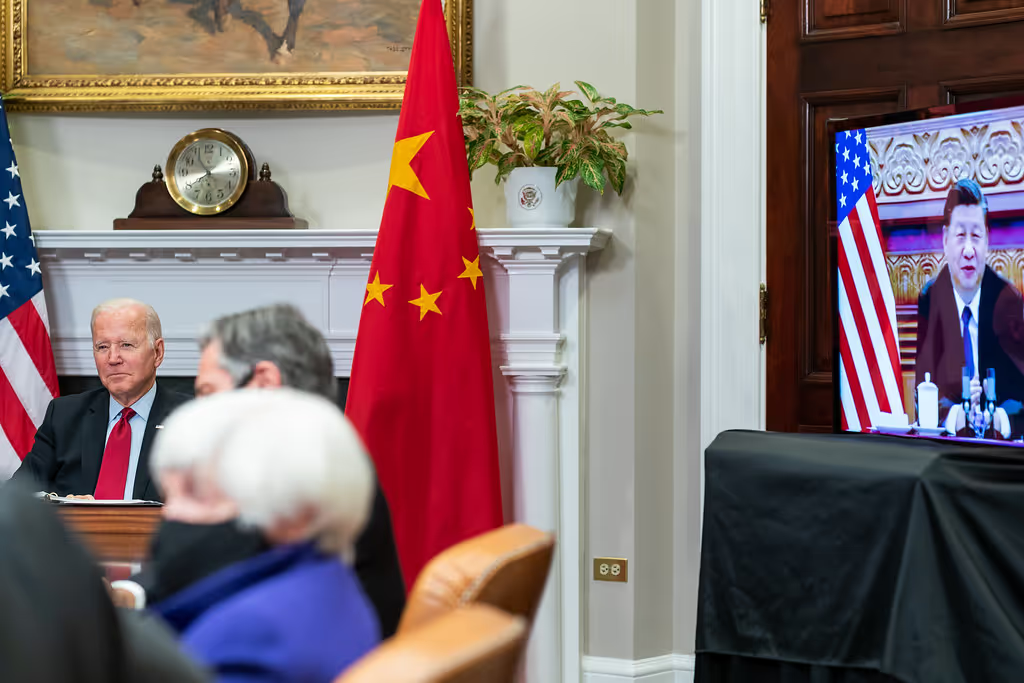
This article, featuring contributions from Patricia M. Kim, Matthew Turpin, Joseph S. Nye Jr., Jessica Chen Weiss, Eun A Jo, Ryan Hass, and Emilie Kimball, explores the question of whether the U.S. should pursue a new Cold War with China.
Key Quotes:
What They Discuss:
What They Recommend:
Key Takeaways:
This is a brief overview of the aforementioned work from the Brookings Institution. For complete insights, we recommend reading the full article.

Overview:
This article was written by Gracelin Baskaran, focusing on the implications of China's recent ban on the export of rare earth extraction and separation technologies.
Key Quotes:
What They Discuss:
What They Recommend:
Key Takeaways:
This is a brief overview of Gracelin Baskaran's work from the Center for Strategic and International Studies. For complete insights, we recommend reading the full article.

Overview:
This report by James Andrew Lewis at the Center for Strategic and International Studies (CSIS) discusses the need for a new strategy in the West's technology transfer policy toward China. The report examines the strategic risks posed by China's commercial and technology practices and suggests that a collective approach is necessary to compel China to become a responsible participant in global markets.
Key Points:
Key Quotes:
What They Discuss:
What They Recommend:
Key Takeaways:
This is a brief overview of the report from the Center for Strategic and International Studies. For complete insights, we recommend reading the full report.
Overview:
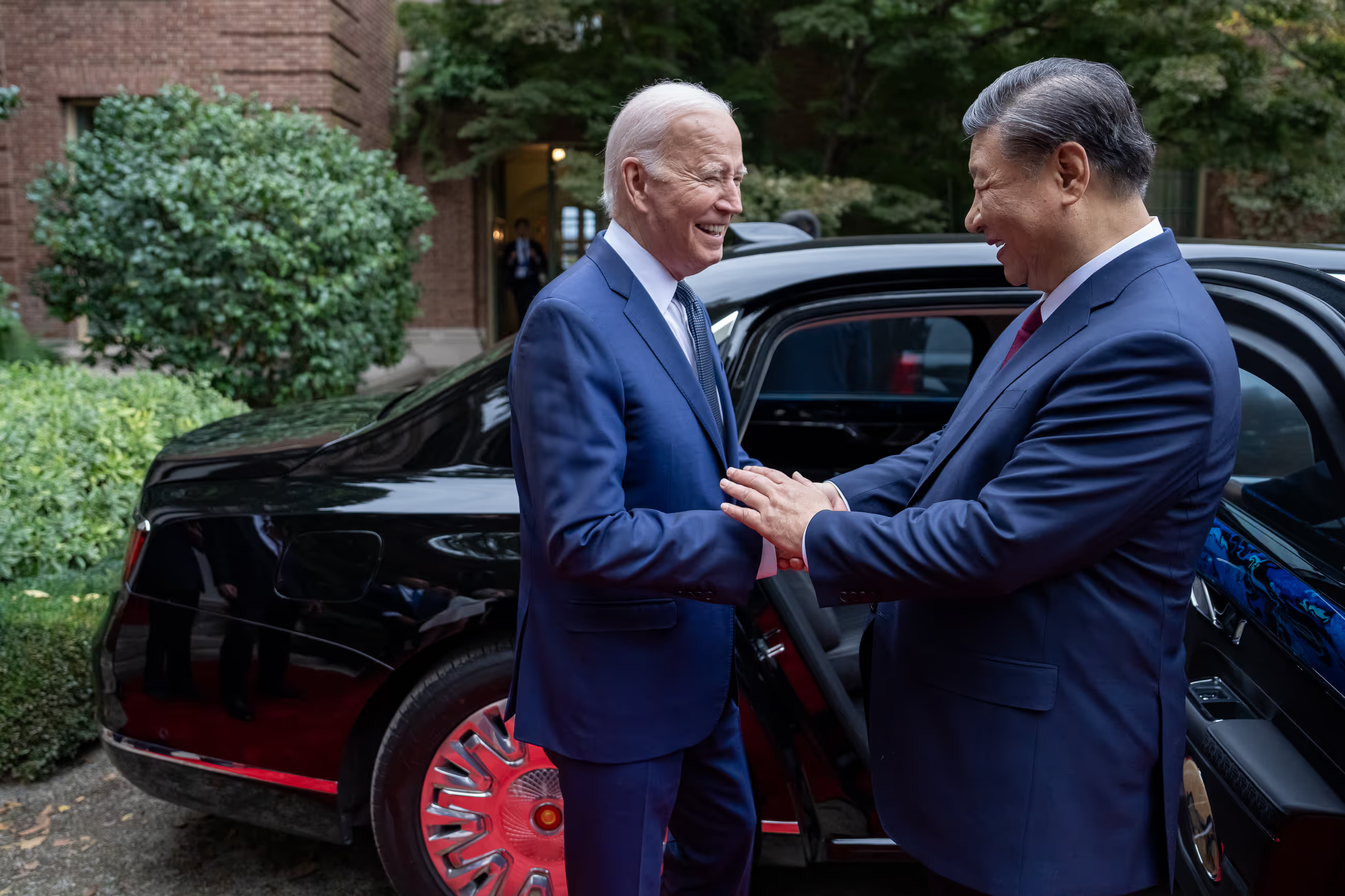
This report by Jake Werner from the Quincy Institute for Responsible Statecraft discusses "Common Good Diplomacy" as a framework for stable U.S.-China relations.
Key Quotes:
What They Discuss:
What They Recommend:
Key Takeaways:
This is a brief overview of Jake Werner's report from the Quincy Institute for Responsible Statecraft. For complete insights, we recommend reading the full report.

Overview:
This report by Wilson Beaver at The Heritage Foundation discusses the challenges in estimating the Chinese defense budget and draws parallels with the difficulties faced during the Cold War in assessing the Soviet defense budget. The report emphasizes the importance of accurate, data-informed estimates of the Chinese defense budget for assessing the U.S. defense budget and suggests that lessons from the Cold War can inform current analysis of China's military spending.
Key Quotes:
What They Discuss:
What They Recommend:
Key Takeaways:
This is a brief overview of Wilson Beaver's report from The Heritage Foundation. For complete insights, we recommend reading the full report.

Overview:
Key Quotes:
What They Discuss:
What They Recommend:
Key Takeaways:
This is a brief overview of Jacob Stokes and Alexander Sullivan's work from the Center for a New American Security (CNAS). For complete insights, we recommend reading the full article.